Skip to content
by Rabbi Nathan Kamesar
What a heavy week this has been. During this season in which we are so conscientious about fostering light in the midst of the cold, dark winter, there was the shooting at Brown University, resulting in the deaths of two students, with a suspect still at large; the apparent murder of the beloved Jewish filmmaker, Rob Reiner, and his wife, the producer and photographer, Michele Singer Reiner, in horrific circumstances; and, of course, the deadliest attack on a Jewish community since October 7, 2023, this past Sunday at a Hanukkah celebration in Sydney, Australia, resulting in the deaths of 15 people, ranging in ages from 10 to 87, one of whom had survived the Holocaust only to perish in this antisemitic assault.
We live in harrowing times, and the media environment in which we live means we are more aware of the totality of the world’s suffering than ever before. This brings with it immense challenges, and immense responsibilities, attuned as we are to the need to chart a pathway forward.
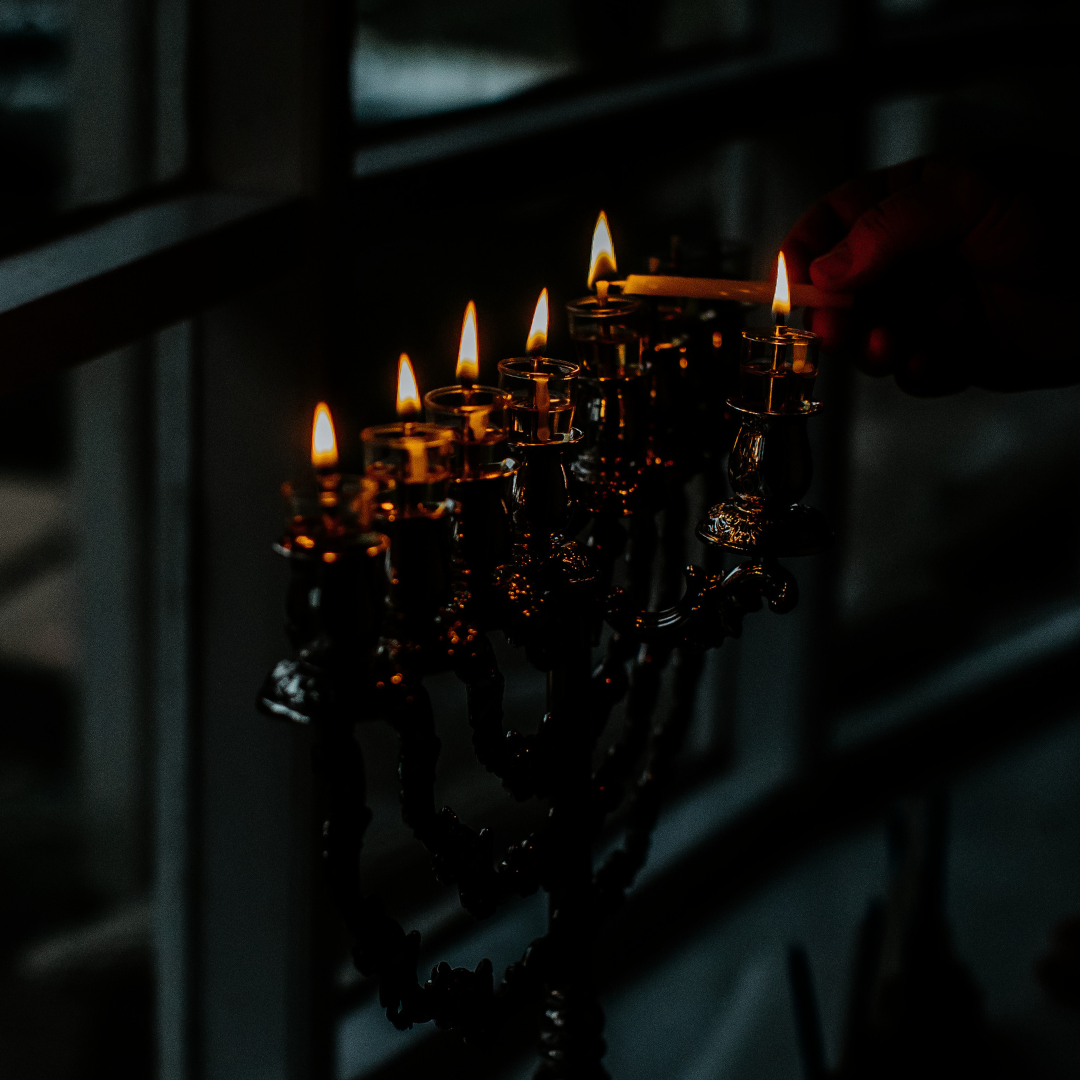
For me, this is all the more reason to embrace the rhythms of Jewish life, which connect us to a sense of people, place, and purpose. When lighting the Hanukkah candles, we can tap into the spirit of resilience which has sustained our people for countless generations and will continue to do so; we can embrace the spirit of fostering light in the midst of darkness, for our people and for all peoples under duress; we can recognize the spirit of giving, which serves to brighten dark corners of the world and brings light to people who need it; we can align ourselves with a sense of faith in “God’s spirit,” as the prophet Zechariah invokes, propelling us to bring light into the world.
May we continue to experience a Hag Urim Same’ah, a joyous festival of lights, together.
I’d like to share the D’var Torah (the teaching of Torah) that I gave at our most recent weekly musical Friday Shabbat gathering followed by dinner (note that we will be in person this Friday night, December 19, and Zoom-only on Friday, December 26), on the “true” origin story of Hanukkah:
I think that you think that you know the origin story of Hanukkah.
Perhaps you think that the origin story of Hanukkah is about the oil. As it says in the Talmud, when the Maccabees emerged victorious over the Greeks, they searched the temple and found only one small jar of oil with which to light the menorah, only enough to light the menorah for one day. But, “na’asah bo nes,” a miracle occurred, and the oil lasted for eight days. Maybe you think that is the origin story of Hanukkah.
Or perhaps some of you are more cynical than that. That’s a children’s story, you might say. To the extent there was a miracle, it had nothing to do with oil. The miracle was, as our siddur says, the military victory — in which God delivered the many into the hands of the few, the mighty into the hands of the weak. The tiny Hasmonean army defeated the massive Greek army; that is the story of Hanukkah, some say.
Would it surprise you to hear that neither is correct, or, at the very least that the origin story of Hanukkah precedes both of those in time?
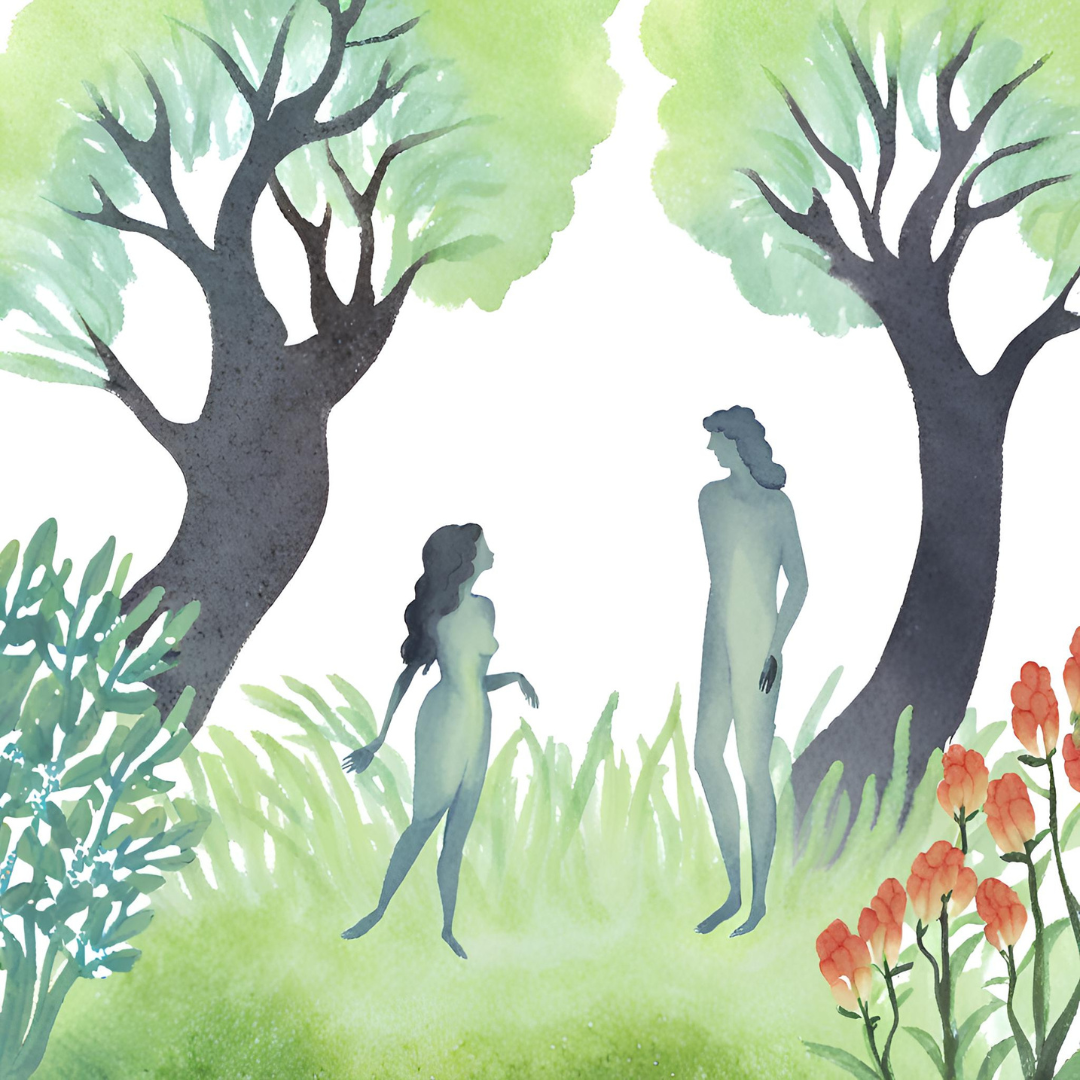 Think back even further, as far back as you can go, to the first human being, Adam. Adam, as we know, was exiled alongside his beloved Eve from the Garden of Eden after they had eaten from the forbidden fruit. This story goes back to the first year they spent outside of the Garden of Eden. In the early months of that first year, after Rosh Hashanah — remember Rosh Hashanah marks the anniversary of the creation of the world — they notice that with each passing day, the world begins to feel darker and darker, the sun, each day, begins to set earlier and earlier.
What does Adam do upon encountering this darkening world?
“Oy li!” he says. That’s a direct quote from the Talmud, and it means: “Oy to me!” or “Woe is me!”
“Perhaps because I sinned,” he continues, “the world is becoming dark around me.”
“Perhaps because I sinned,” he says, “the world is returning to tohu vavohu,” to the primordial state of the world before creation, to a state of being unformed and void, chaos and disorder. “Because of me!” Adam worries.
So he proceeds, day after day, to pray and to fast, to pray and to fast, to see, we might imagine, if he can’t reverse this apparent de-evolution, disintegration of the world.
Then after, you guessed it, eight days of prayer and fasting, prayer and fasting, he notices that the days were, slowly but surely, beginning to lengthen again. Still dark earlier than he had been used to, but getting progressively longer.
Wait a minute he says, “Minhago shel olam hu.” “This is the minhag,” this is the custom, this is the way, “of the world.”
“It wasn’t me,” he suggests. “It wasn’t my doing, my sin, my fall. This is the way of the world. The days become shorter, but then they become longer.” He then went and observed a festival of celebration, of light, for, yes, eight days; hence: Hanukkah.
 So what do we take from this long-lost origin story of Hanukkah, found in our Talmud?
I find Adam’s initial response to the darkening of the world to be so profoundly… human. How many times have we done something for which we feel regret, for which we feel shame, a relationship Adam clearly has to his actions in the Garden of Eden, in which we think those actions, and therefore we ourselves, sit at the very center of the universe, around which the sun rises and sets? Adam is sure that the darkening of the entire cosmos is due to his own missteps, due to him! How human.
And so he fasts and prays, fasts and prays.
But what is remarkable about the story is not that first part; it’s what happens next. When the world begins to brighten again, and the days begin to lengthen, he does not conclude: “There. I fixed it. It’s a good thing I fasted and prayed because it is because of my actions that the world was healed.”
He manages, as the earth continues its orbit around the sun, to gain some perspective. “I am not the center of the universe,” he seems to learn. “The earth is not even the center of the universe,” he might intuit. Minhago shel olam hu. It is the custom of the world to experience seasons, some seasons being darker, some seasons being brighter.
We all, in my view, could learn a bit of a lesson from Adam.
But we should be careful to say that that lesson is not, “nothing we do matters.”
According to the Talmud, the following year, Adam observed both eight days, first the eight days of fasting and praying, fasting and praying, and the eight days of celebration. Adam did not conclude, my prayers don’t matter; my religious life doesn’t matter; nothing I do matters; he continued to anchor himself in ritual — but he managed to channel a little more balance in his relationship to the universe: some things we have control over, he intuited, some things we do not.
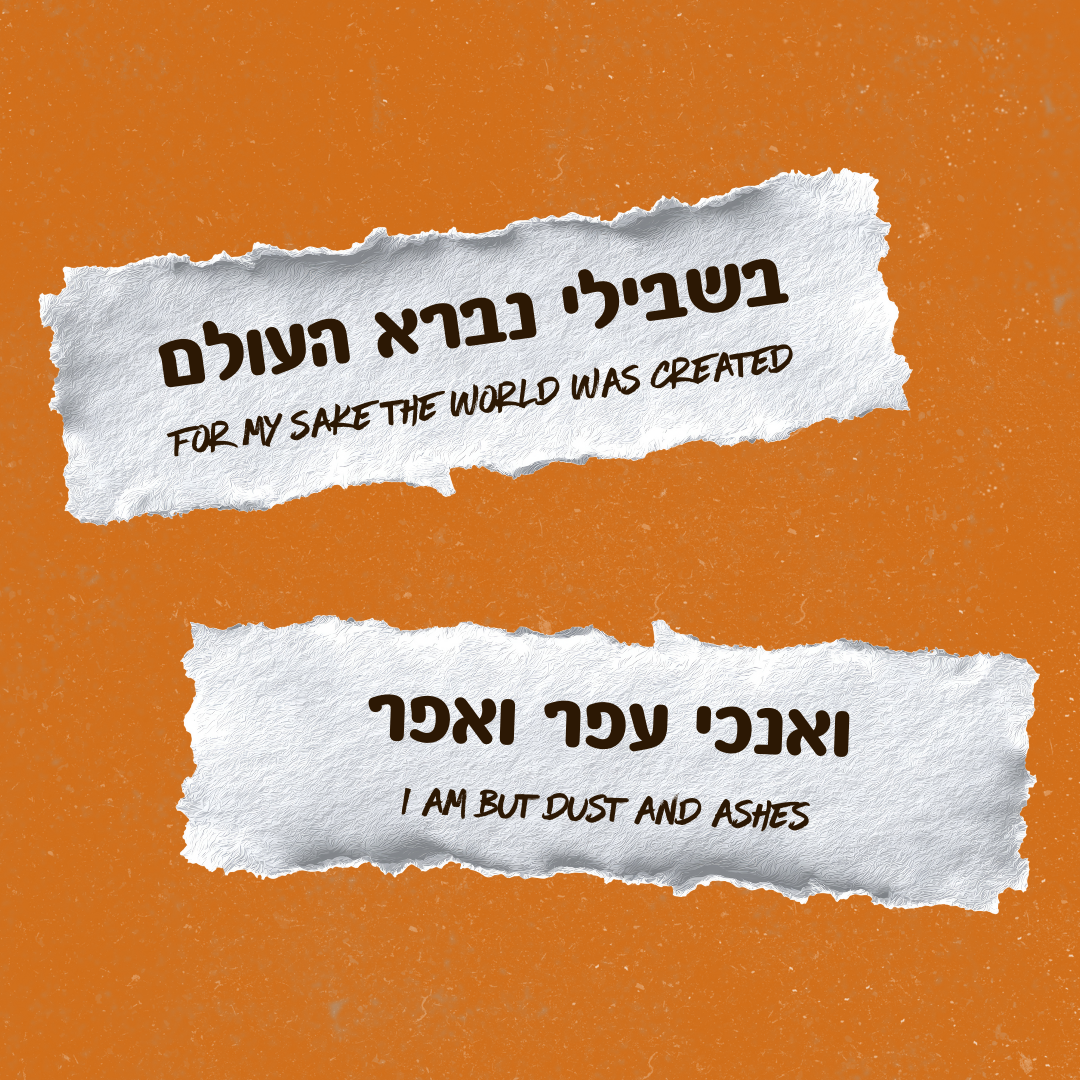
He was perhaps anticipating the famous teaching from Rabbi Simcha Bunim of Pzhishe, that every person should have two slips of paper in their pocket. On one should be written: Bishvili nivra ha’olam, “For my sake the world was created.” On the other should be written: V’anokhi afar va’efer, “I am but dust and ashes.” The wisdom, this teaching implies, comes from making sure we know which slip of paper to reach for and when.
During moments when we’re underestimating our capacity to make an impact, when we’re underestimating our value, the unique, singular spark each of us brings to the world, we reach for the slip which says Bishvili nivra ha’olam, “For my sake the world was created.”
When we’re full of self aggrandizement, imagining that the balance of the world hangs on our every action, that everything is about us, we reach for the other: V’anokhi afar va’efer, “I am but dust and ashes” — from dust I came and to dust I shall return.
Our actions matter within the course of the broader currents that we navigate; within minhago shel olam, within the way of the world, which, like Adam, we are still trying to fully discern.
Wishing us all a sense of discernment and peace in this season of Hanukkah.