Skip to content
by Rabbi Nathan Kamesar
I’d like to share with you the D’var Torah that I delivered at a recent Friday night TGIShabbat service, services which we hold every Friday from 6:00-7:15 pm, preceded by our 5:30 pm Shabbat Schmooze and followed by dinner at 7:15 pm — which you are always welcome and encouraged to attend:
A word that shows up a lot in Jewish life and is ever present in the backdrop of our Friday night services, even if not explicitly, is the word, tikkun, often translated as repair.
Most of us know this word in the concept of the phrase “tikkun olam,” repair of the world, a phrase that has become a catchall for our understanding of what we perceive as the Jewish obligation to contribute toward the repair of the broken world we have inherited. It’s a phrase that has become so common here in Jewish life in the United States that, as one joke tells it, an American Jew visiting Israel asks his guide, “How do you say tikkun olam in Hebrew?”
But in addition to standing for this concept of our responsibility to carry out acts of social justice, tikkun in Jewish life refers to something much more fundamental: to a mystical concept, yes, recognizing the inherent brokenness and fragmentation in the universe, and also, in each of our lives. There is so much about our lives, Jewish tradition teaches, that calls out for tikkun, for healing. And this is not a cynical statement of how bad things are; this is a powerful statement of how full our lives are of possibilities, opportunities, callings, to bring about soul-stirring tikkunim, repairs, healings.
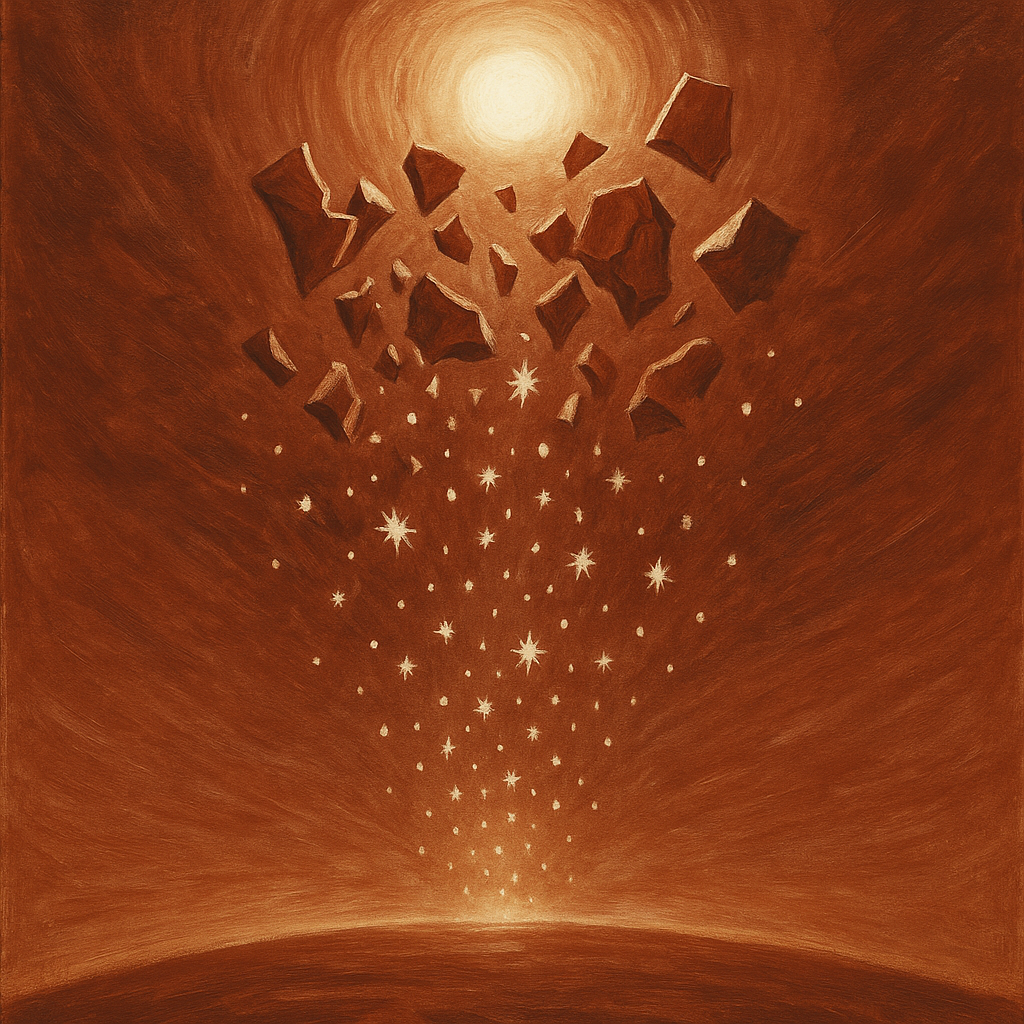 As I allude to every time we carry out the first part of the Friday night service, Kabbalat Shabbat is based on an understanding that when the world was created, something about the transition from the perfect state of godliness, of Divinity, that preceded the world to the world that was created from that Divinity, led to a cosmic rupture, a shattering, and the world as we know it came about through a combination of the Divine light that began creation, and a shattering of the vessels that held that light. The world couldn’t be perfect, according to Jewish tradition, because the only thing perfect is God. So when God made space for the world to be created, God had to make space for imperfection. We therefore inhabit an imperfect, yet cosmically beautiful, world made up of the sparks of light and shattered vessels with which it was created, just as we are each made up of those sparks of light and shattered vessels ourselves.
Which is where the word tikkun comes in: while the world, by its nature, is embedded with a layer of imperfection — an understatement to many of us, I’m sure — our task, as Jews and as humans, nonetheless remains to effect tikkun, to help repair it, repair ourselves, repair God, restoring it all to its former glory and oneness, a oneness which in Judaism we call ge’ulah, redemption.
The premise of the Friday night service is that one of the ways we can slowly but surely contribute to acts of tikkun is through ritual, through liturgy, through song. If we sing, if we pray with the right kavanah, the right intentionality, the mystics believe, we begin to stitch the torn pieces, the broken pieces, back together, bringing a little more harmony into the world, into ourselves, and into God.
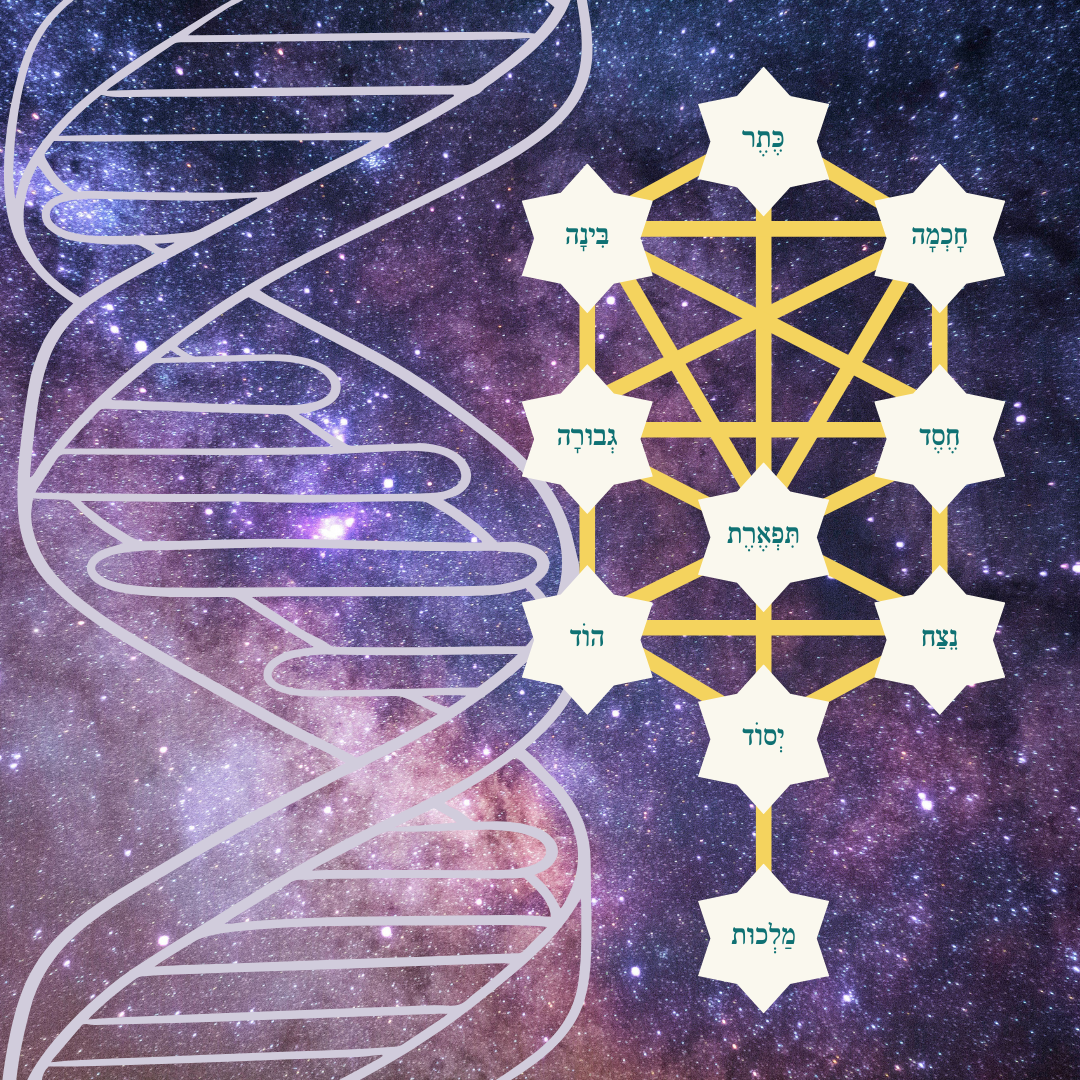 The Jewish mystics understand the universe, God, each of us, to all share a certain DNA, one might call it, a DNA they refer to as the s’firot, which means countings or emanations. Imagine that you could hold up a spiritual x-ray machine, a cosmic x-ray machine, to any of us, to God, to the world as a whole. The Kabbalists posit that we would all have the same basic DNA, the same basic cosmic structure, s’firotic structure. And right now, for each of us, for all of us, and for God, that structure would be not entirely healed, not entirely whole, not entirely in harmony.
Sometimes it is more in harmony than others: when we are fulfilling mitzvot, carrying out acts of love and caring toward one another, when we attune ourselves to the source of holiness through prayer and ritual life, the structure begins to heal.
But until the age of ge’ulah, redemption, is brought about, that healing is incomplete.
The thing is, we don’t know when that will be; we don’t know if our very actions will be the events which tip the scale. In this sense, it is analogous to the teaching from Pirkei Avot that we are supposed to make t’shuvah, repentance or return, one day before one’s death: since we don’t know when that will be, it raises the stakes, the urgency for us, to carry out these acts of faith all of our lives.
And such opportunities, tradition teaches, are present throughout our lives. Rabbi Rueven Kimelman observes that the six psalms that begin Kabbalat Shabbat, Psalms 95 through 99 plus 29, correspond to the six days of the week, each representing a day of creation. “While reciting the psalms, one contemplates the corresponding days of the week, reflecting on ways to improve it. In so repairing each day,” he writes, “one’s fragmented soul is made whole, a process known as tikkun hanefesh.” So when we sing Psalm 95, we reflect on Sunday: what happened last Sunday? What might happen this coming Sunday? How can my singing this psalm bring about a sense of repair in my soul for what took place last Sunday and for what I pray takes place next Sunday? The process continues, with Psalm 96 for Monday, Psalm 97 for Tuesday, and so on. How can my concentrated prayer, my concentrated reflection, bring about a sense of repair in my soul?
This sort of reflection and tikkun hanefesh, the repair and healing of the soul, takes place at the end of a week, and it also takes place at the end of a life. Rabbi Amy Eilberg, the first woman ordained as a Conservative rabbi, who spent many years working in pastoral care and in hospice settings, writes that refuat hanefesh, healing of the soul — healing of the person, healing of the person’s life — is possible until the very last breath. “Not infrequently,” she writes, “the final stage of life offers the possibility of the healing of relationships, of guilt and regret, of isolation, of lifelong emotional or spiritual pain. This healing is available even when healing of the body is no longer possible.”
“Perhaps,” she continues, this is “why we continue to offer the Mi Sheberakh, the prayer for healing, even when it appears that a healing of body is not possible. So many kinds of healing can still unfold. We pray for God to bring the most perfect healing to this person. After all, how do we know what kind of healing God may envision, even as death approaches?”
On the one hand, tikkun has in some ways become an overused word in Jewish life today; on the other hand, our lives are filled with opportunities for repair of all sorts, and the stakes couldn’t be higher. I hope you’ll join me in seeking them out. Wishing you a lifetime, a week, a Shabbat, filled with repairs of the soul.
Shabbat shalom,
Rabbi K.