
Erev Rosh Hashanah 5786
by Rabbi Nathan Kamesar

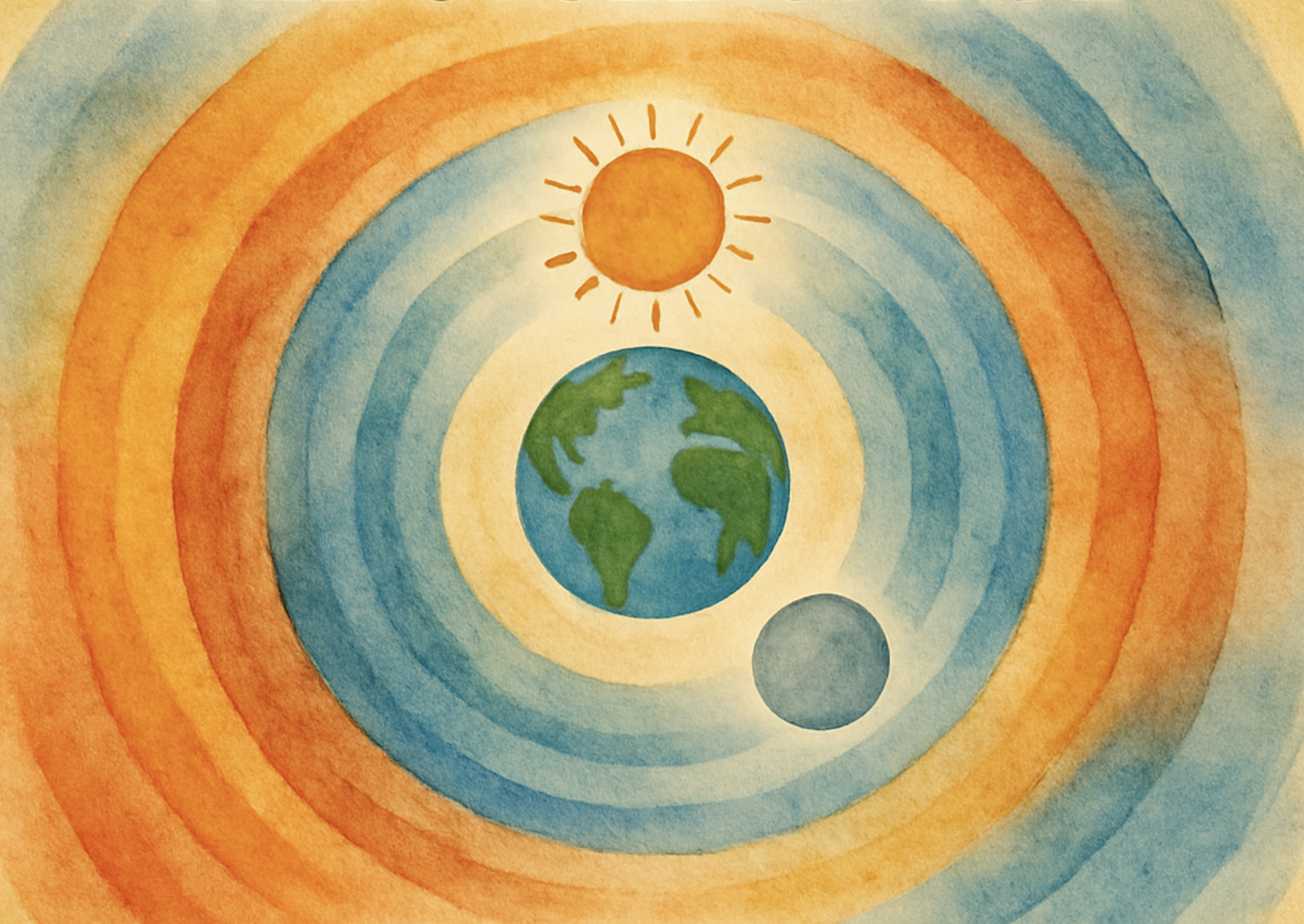
This is a special moment. We’re welcoming in Rosh Hashanah, the New Year. It’s a moment of beginnings, of the conclusion of one cycle and the beginning of the next. The earth continues its revolution around the sun, as the moon, relevant to how Jews have marked time for countless generations, continues its revolution around the earth.
Of course, when we’re talking about a revolution, a circle, a cycle, where it begins, and where it ends is not so clear; what is the true beginning point of the earth’s journey around the sun each year?
Judaism, too, has had an ambivalent relationship to a year’s beginnings. The Torah in fact does not refer to this holiday that we are commemorating right now as Rosh Hashanah, the head of the year; it refers to it as Yom T’ru’ah, the day of the blasts, the blasts of the shofar. The Torah identifies a month called Aviv, the spring, the month during which Pesah falls, as the first month of the year; identifying tonight’s celebration, Yom T’ru’ah, the day of blasts, not as the first day of the first month but the first day of the seventh. Seven, in Jewish tradition, represents not beginnings, but completion, the completion of a cycle, seven days of creation. So today, we are commemorating a day that can represent the beginning of a cycle, or its conclusion; in many respects, when talking about a cycle, one and the same.
Over time, the oral Torah, Torah that tradition teaches was also revealed to us at Mount Sinai but never written down until later generations, was shared, teaching us that this day is indeed the first day of the new year, in part perhaps because it represents a different meeting point of conclusions and beginnings.
A midrash, a sacred rabbinic teaching, suggests that Rosh Hashanah commemorates not the first but the sixth day of creation, the conclusion of the six working days of creation. The conclusion of six working days but the beginning of something else: of humanity. Of us. The sixth day, according to tradition, is the day on which humanity was created, the only day of creation which God called not just tov, good, but tov me’od, very good. 
Rosh Hashanah, according to Jewish tradition, commemorates the day humanity was created, a day which God called “very good.” Rosh Hashanah celebrates newness not because it says in the Torah that Rosh Hashanah is the first day of the year, but because it represents the creation of humanity, of us.
Of course, very good in its conception does not always mean very good in actuality, as we human beings know all too well, having witnessed the course of history, and the rabbis in their midrash describe, hour by hour in the twelve daylight hours, all that took place that first day of our existence, foreshadowing all of human life, the day that is being commemorated today, on Rosh Hashanah:
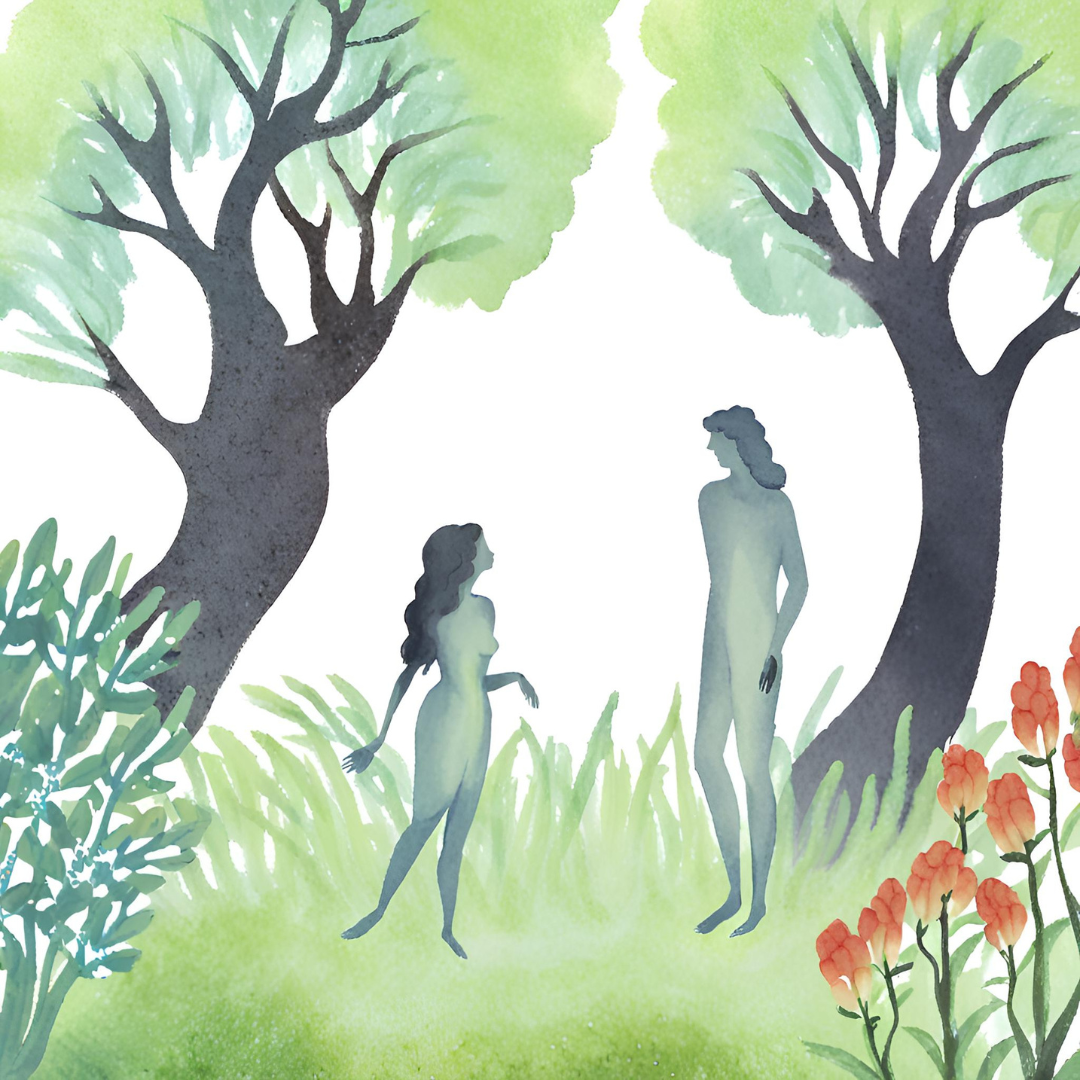
בְּיוֹם רֹאשׁ הַשָׁנָה On the first Rosh Hashanah, this poetic representation of the first day says, בְּשָׁעָה רִאשׁוֹנָה in the very first hour עָלָה בַּמַחֲשָׁבָה. It arose in God’s thoughts. The creation of humanity arose first as a notion in God’s thoughts. In the second hour, the text says נִתְיָעֵץ עִם מַלְאֲכֵי הַשָׁרֵת God consulted with מַלְאֲכֵי הַשָׁרֵת the ministering angels. From day one, all the hosts of heaven were invited to reflect on the decision to create humanity. בַּשְׁלִישִׁית In the third hour,  כִּנֵס עֲפָרוֹ God gathered the dust, from which we were created, כִּי־עָפָר אַתָה וְאֶל־עָפָר תָשׁוּב for dust we are and to dust we shall return, the Torah teaches. In the fourth hour גִבְּלוֹ God kneaded the dust, like dough, like clay, like soil; in the fifth hour רִקְמוֹ God shaped it, in the sixth hour עֲשָׂאוֹ גֹלֶם God made it into a golem, a lifeless body; in the seventh God נָפַח בּוֹ נְשָׁמָה breathed a soul into this body; in the eighth הִכְנִיסוֹ לַגָן God brought this ensouled body, this human being, into the Garden. In the ninth נִצְטַוָה the human being was commanded, not to eat from the tree of life, one presumes; in the tenth, a mere hour later, the human being עָבַר transgressed, in the eleventh נִדוֹן he was sentenced, in the twelfth יָצָא בְּדִימוּס he emerged with a pardon. 
Then the text concludes and says, “The Holy One blessed be He said to the human being: ‘This day, Rosh Hashanah, is a siman (a sign), for your descendants. Just as you stood trial before Me this day and emerged with a pardon, so your descendants are destined to stand trial before Me on this day of Rosh Hashanah and emerge before Me with a pardon.'”
And here we are, countless generations later, commemorating the beginning of humanity. But as we can see, we are not just commemorating a beginning; we are commemorating a cycle: the cycle of a year, the cycle of a life.
The reason, tradition teaches, that God called the sixth day tov me’od, very good, is not because it was tov me’od from its inception, but because it was the day on which Adam and Eve made t’shuvah, repentance/return, uncited in this midrash, but explained in another one, making repair and returning to the goodness that was within them, within each of us, earning them the pardon God gave them.
God, tradition teaches, understands that there will be cycles to life, that life is not unidrectional, a one way ratchet that never backtracks: each life, and the life of humanity, will experience progress, profound missteps, redemptions.
Our challenge, in a sense, is to ensure those redemptions outpace our missteps. The reverse can occur. A song that sticks with me this season is from a different sage, one Bruce Frederick Joseph Springsteen, who sings, heartbreakingly:
It’s the same thing night on night
Who’s wrong, baby, who’s right?
Another fight and I slam the door (on)
Another battle in our dirty little war
When I look at myself I don’t see
The man I wanted to be
Somewhere ‘long the line, I slipped off track
movin’ one step up and two steps back
In Jewish tradition, we recognize the persistent presence of cycles, but we pray that they are cycles of repair, not cycles in which we get caught, stuck.
Judaism believes in the rhythm of cycles but also in our capacity to break the ones that hold us back, or perhaps more accurately, to repair their inevitable brokenness. Rosh Hashanah is a siman, a sign of the capacity for t’shuvah, for repentance and renewal. Tomorrow, during the spiritual high point of our service, Un’taneh Tokef, when we speak of the sacred power of this day, we will declare ki lo tahpotz bemot hamet. You, God, do not desire the death of the sinner. But rather that we change our ways and live. You wait until the day of one’s death, and if one returns, miyad tekablo, You accept that person back immediately. 
What we do is aspire year after year, as we commemorate another Rosh Hashanah, another cycle around the sun, another cycle of cycles as the moon circles the earth, to ensure our repairs outpace our breaks, which will come inevitably.
The life we’re confronted with and the life we experience never promised perfection; never promised an absence of difficulty or an absence of challenge, and that’s not what’s expected of us. Rosh Hashanah is not a celebration of a perfect world, it’s a commemoration of repair, of finding wholeness in brokenness.
Another midrash on the story of Adam and Eve, reflecting on this cycle of a life, as retold by Rabbi Edward Feinstein: 
From the day Adam and Eve were exiled from the Garden of Eden, they lived together east of Eden, tilling the earth, raising children, and struggling to stay alive. After those many years of struggle, when their children were grown, Adam and Eve decided to take a journey before it was too late and see the world that God had created. They journeyed from one corner of the world to the other and explored all of the world’s wonders. They stood upon the great mountains, trekked across the vast deserts, walked amid the mighty forests, and traversed the magnificent seas. They watched the sun rise over the endless wilderness and saw it set into the boundless ocean. All that God had created they beheld. 
In the course of their journeys, wandering from place to place, they came upon a place that seemed so familiar. They came upon Gan Eden, the Garden of Eden, from which they had been exiled on the very first day of their lives. The garden was now guarded by an angel with a flaming sword. This angel frightened Adam and Eve, who fled. 
Suddenly they heard a voice, a gentle, imploring voice. God spoke to them: “My children, you have lived in exile these many, many years. Your punishment is complete. Come now and return to my garden. Come home to the garden.” 
Suddenly, too, the angel disappeared. The way into the garden opened, and God invited them in. But Adam, having spent so many years in the world, had grown to reflect. He hesitated and said to God, “You know, it has been so many years. Remind me, what is it like in the garden?” 
“The garden is Paradise!” God responded. “In the garden there is no work. You need never struggle or toil again. In the garden there is no pain, no suffering. In the garden there is no death. In the garden there is no time — no yesterday, no tomorrow, only an endless today. Come, My children, return to the garden!” 
Adam considered God’s words. He thought about a life with no work, no struggle, no pain, no passage of time. And no death. An endless life of ease, with no tomorrow and no yesterday. And then he turned and looked at Eve, his wife. He looked into the face of the woman with whom he had struggled to make a life, to take bread from the earth, to raise children, to build a home. He read in the lines of her face all the tragedies they had overcome and the joys they had cherished. He saw in her eyes all the laughter and all the tears they had shared. 
Eve looked back into Adam’s face. She saw in his face all the moments that had formed their lives — moments of jubilant celebration and moments of unbearable pain. She remembered the moments of life-changing crisis and the many moments of simple tenderness and love. She remembered the moments when a new life arrived in their world and the moments when death intruded. As all their shared moments came back to her, she took Adam’s hand in hers. 
Looking into his wife’s eyes, Adam shook his head and responded to God’s invitation. “No, thank you,” he said. “That’s not for us, not now. Not yet at least.” “Come on, Eve,” he said to his wife. “Let’s return home.”
Let’s return home. Let’s make t’shuvah, facilitate a return. Rosh Hashanah is a commemoration of the returns we make: the return the earth makes around the sun, the returns/repairs we make in our lives, the returns our lives make as they bring us to this point each year. L’shanah tovah tikatevu, May you each be inscribed for the year in the Book of Life, for good. Shanah tovah.