Skip to content
This Shabbat is known as Shabbat Shirah, the Shabbat of Song. That is because, in celebration of becoming Bat Mitzvah, Yaeli Zhang will lead us in the chanting of a very special song, Shirat Hayam, the Song of the Sea. We’ve already gotten a taste of it tonight, and in fact we do at every morning and evening service, no matter the day: Shabbat and Hagim, special services and regular. The taste tonight was when our Kitah Zayin (7th grade) students came up and sang mi kamokhah, who is like you Adonai, among the mighty, majestic in holiness, awesome in praises, doing wonders.
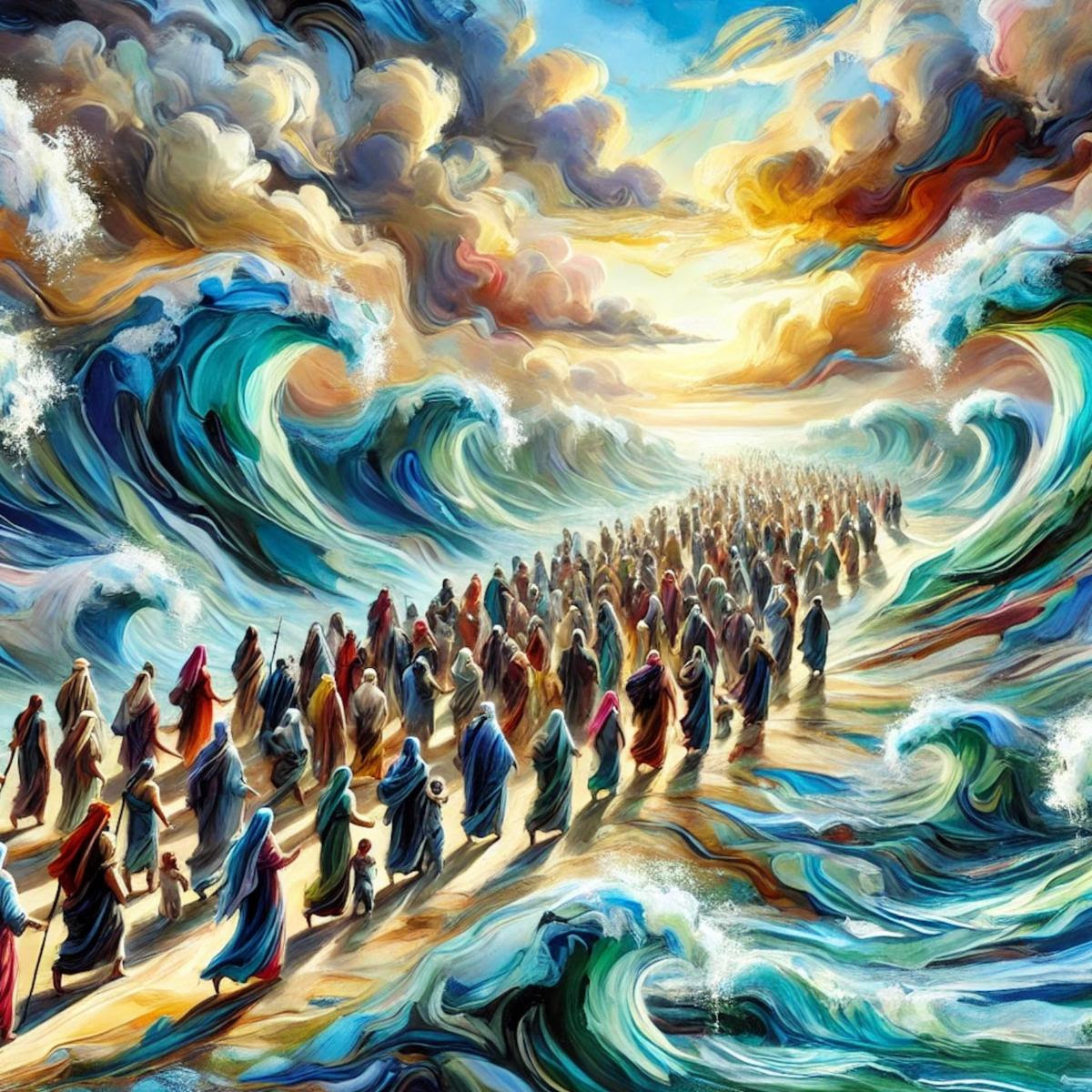 As many of you know, this song which our seventh graders sang comes directly from the Torah, from the book of Sh’mot, Exodus, and is found, in fact, in this week’s Torah portion. These are the words, among many others, that the Israelites sing upon crossing the thunderous sea, which, having split, they are able to do on dry land, their years of misery, oppression, and constriction behind them, the wilderness in front of them, the opportunity to navigate it in freedom.
When they experience that deliverance, that miracle, that sense of wonder, their response, spontaneously, is to sing.
One of the things I love about Judaism — and religious traditions in general — is the myriad ways they offer us to express the inexpressible, to grapple with the ineffable, and to articulate our encounter with mystery beyond words.
Song is one such tool. Throughout Jewish tradition, moments of mystery, be they moments filled with joy or sorrow, lead us to respond with song. When we lose a loved one, carrying that pain and grief, we respond by singing mizmor l’David Adonai ro’i lo ehsar. The words mean, “A psalm of David, God is my shepherd I shall not want,” and while some of us might connect to those lyrics — in a moment where we feel lost, we connect to the imagery of God shepherding us to greener pastures — for others, we simply allow the plaintive melody to hold us, to give articulation to a feeling in our soul that words can’t match.
On the other end of the spectrum, when we want our joy to be buoyed, when we want to feel held and joined in moments where our hearts are singing, a simple siman tov u’mazal tov can carry us away. Its lyrics simply mean, “may we experience good signs and good fortune.” But the music captures so much more than that.
 And music isn’t the only non-literal tool in the Jewish toolkit that helps us grapple with mystery, giving us a sense of purpose and direction. Another, perhaps my favorite, is story. I’ll share with you the ultimate story in Jewish tradition, captured concisely by scholar Elliot Ginsburg, which offers a simple answer to who we are, why we are here, and what lies in store for us.
“To be a Jew,” he writes, “is to have a shared metanarrative,” a shared story which provides a pattern and structure for our beliefs, and which gives meaning to our experiences.
“To be a Jew,” at least “in the classical setting,” he writes, “is to hold that this world is created as an act of divine will” — that God created the world with a sense of purpose, whether or not it is discernible to us; that one is “the heir of Abraham and Sarah” — that we have ancestors whose legacy we inherit; that “one is the heir of those who endured (and endure) Egyptian slavery and the gifts of Redemption” — that we inherit the legacy of those who endured and continue to endure constriction and oppression but also who have been redeemed from that, who made it through alive, filled with vitality.
 We inherit the legacy of those who “stand at the pivot of Sinaitic revelation and its Covenant,” who feel God’s presence and the sacred blessings and responsibilities that flow from that presence, “who know the joys of homecoming and the enduring dislocations of exile,” who feel the ebbs and flows of life, knowing there are times we experience alienation, like a stranger in a strange land, other times when we feel like we are home, joined by those who love us and whom we love in turn. “To be a Jew,” at least traditionally speaking, he writes, “is to hold that there will be a Messianic resolution to history,” that all will be made well in the end, “though,” he writes, “the Messiah doth tarry,” that resolution sure is taking its time, and probably will continue to.
While two Jews will give you three opinions, and while the nooks and crannies of this story could take you in a million different directions and lead you to a million different conclusions, fundamentally, at its base, many of us operate with some version of this story floating around in our minds, whether, upon examination, we would embrace it or not. Like music, story is a way that we Jews make sense of mystery, injustice, discerning a sense of purpose.
A final lever we have at our disposal to help us grapple with the world, to help strengthen our reserves, to help anchor and root ourselves to a sense of purpose, is ritual.
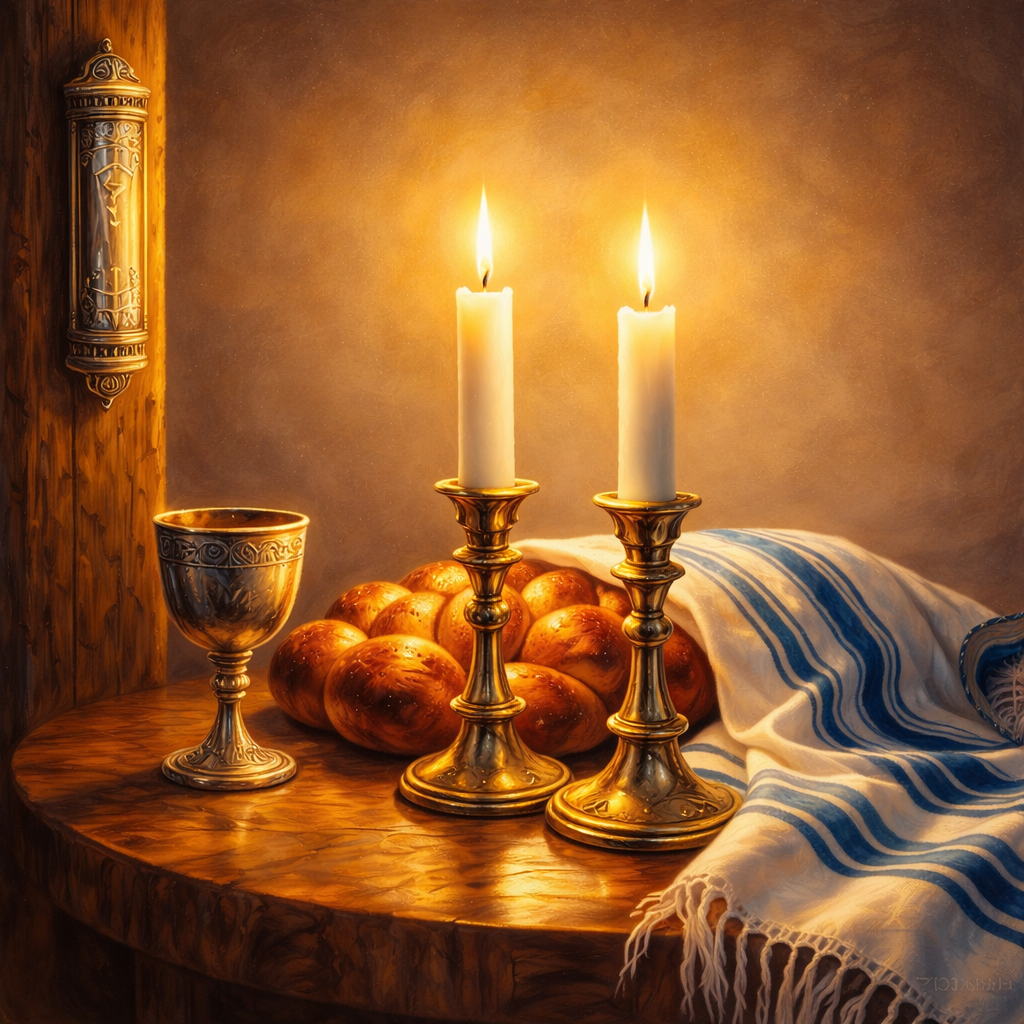 For over a millennia now, Jews have passed down rituals which serve as instruments for helping us to relate to the sacred. In many cases, the meanings behind the rituals have been lost to time, and so, teachings have been generated to offer us a sense of meaning behind the magic. But the magic remains, irrespective of our understanding of the origins of the ritual. Candles flickering on a Shabbat eve or a Hanukkah night, mezuzot adorning our doorposts, a tallit, a prayer shawl, draped over our shoulders — all of these are testimonies to something beyond which we can fully understand, alluding to the holy and the sacred.
As Abraham Joshua Heschel writes, religion — ritual — “is not within but beyond the limits of mere reason. Its task is not to compete with reason, but to aid us where reason gives us only partial aid… To say that the mitzvot [including sacred rituals] have meaning is less accurate than saying that they lead us to wells of emergent meaning, to experiences which are full of hidden brilliance of the holy, suddenly blazing in our thoughts.”
All of these pathways — song, story, ritual — are part of the Jewish landscape, aiding us as we navigate our lives, helping us express the inexpressible, connect when we feel disconnected, draw strength when we are growing weary.
I pray that when Yaeli leads us in song tomorrow, we tap into these sacred resources available to us all.
Wishing you a Shabbat of resourcefulness.
Shabbat shalom,
Rabbi K.