Skip to content
by Rabbi Nathan Kamesar
I’ve found myself wrestling recently with the question of whether or not there is such a thing as a prototypical “Jewish sensibility.” The answer is: probably not. If, as the old joke goes, two Jews means three opinions, and since, if anything, Jewish tradition has always been grounded on preserving this diversity of opinions — the Talmud, for example, often leaves thorny questions unresolved, instead just sharing with us the arguments that past rabbis had across the generations with one another — if diversity and multiplicity are characteristic of a Jewish way of being, then it’s hard to imagine there being a singular Jewish sensibility to how one approaches the world.
Still, I’ve encountered a couple of sources lately, with full recognition of the folly of trying to do so, that have sought to articulate the essence of what it means to be Jewish. And I thought I’d share them with you, since, as we try to make sense of this complex world, it’s helpful to ask what tools and what mindset our tradition brings to bear to those questions.
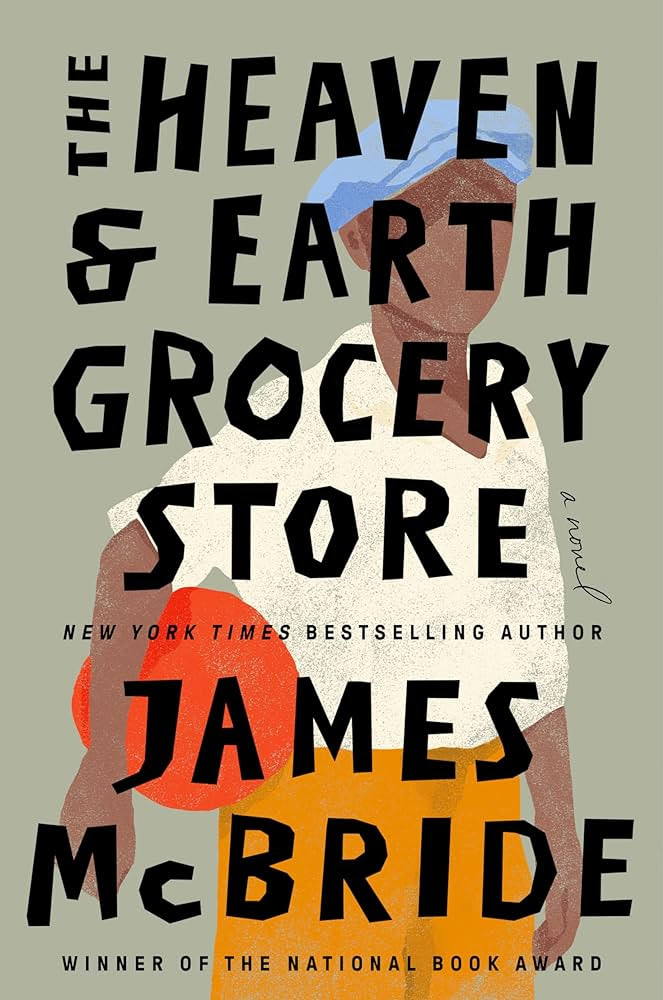 A recent novel that I’m working my way through, The Heaven and Earth Grocery Store, has the hutzpah to take this on most boldly. It is by the award-winning author, James McBride, whose father was an African-American reverend and whose mother was a Jewish immigrant from Poland, the daughter of an Orthodox rabbi. McBride, in fact, didn’t discover his Jewish heritage until he was a teenager. In the book, a beloved character on her death bed describes her husband as “a true Jew,” “a man of ideas and wit who understood the meaning of celebration and music and that the blend of those things meant life itself.”
Now, while we fully acknowledge that the notion of a “true Jew” is of course problematic, that trying to distill a people that has survived for thousands of years, made up of millions of people across time zones and eras, into any one type is a fool’s errand, there are worse ways of being described than that. If we’re looking for a set of values to help us make sense of the world, striving to be a person “of ideas and wit who understands the meaning of celebration and music and that the blend of those things means life itself” isn’t a terrible place to start.
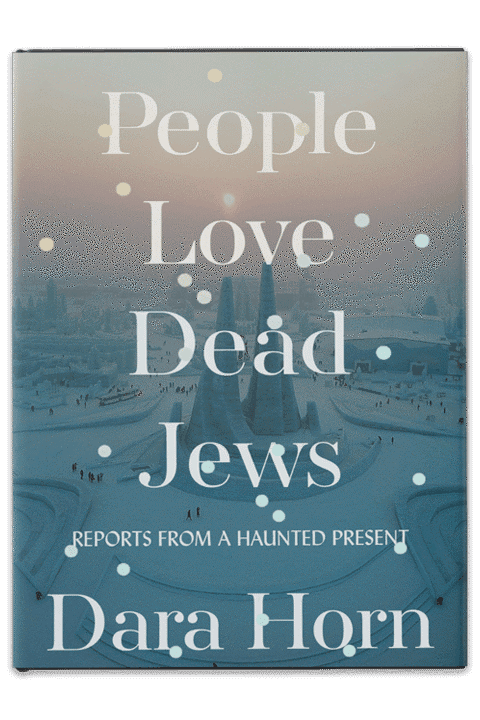 Another such effort comes from another award-winning Jewish author, Dara Horn, a lifelong student of Jewish literature, in Hebrew, English, Yiddish, and beyond. In her provocative series of essays, People Love Dead Jews, she shares one in which she starts to identify a trend in Jewish literature.
She writes this in response to a letter she receives from one of the readers of her own novels, in which the reader described herself as having thrown Horn’s novel across the room when the reader got to a particularly harrowing part, criticizing Horn for not writing a book that was more uplifting. In response, Horn notes that in her study of modern Yiddish and Hebrew literature, uplifting is by no means a common thread of the genre. In her scholarship studying this literature, she observes that the major works in these Jewish languages almost never involved happy endings or, as she writes, “characters getting saved, or having epiphanies, or experiencing moments of grace,” which, she says, are Christian concepts. In fact, she writes, “as I read my way through the foundational works in these literatures, I saw that many of the canonical stories and novels in modern Yiddish and Hebrew literature actually didn’t have endings at all.” She notes that the Torah itself “ends with a cliffhanger, stopping just before the Israelites’ long-awaited arrival in the Promised Land.”
Horn notes that stories with definitive endings tend to “reflect a belief in the power of art to make sense of” the world. And she says that’s not really the approach of Jewish writing. “What one finds in Jewish storytelling,” she writes, “is something really different: a kind of realism that comes from humility, from the knowledge that one cannot be true to the human experience while pretending to make sense of the world.” Jewish stories, she writes, are often about “human limitations, which means that the stories are not endings but beginnings, the beginning of the search for meaning rather than the end — and the power of resilience and endurance to carry one through to that meaning.”
Horn’s insight reminds me of one of my favorite commentaries on the Haggadah, which I cite as often as I can. The Passover Haggadah ends with a simple three word phrase, a phrase which encapsulates the inchoate nature of our existence, the sense that it is not yet complete, and yet in which we can almost imagine it becoming so.
That phrase is, of course, l’shanah haba’ah b’Yerushalayim. Next year in Jerusalem. It expresses a yearning for a sense of perfection we can’t quite taste, even if Jews have more access to the earthly Jerusalem than they ever did before.
About this, scholar Nathaniel Deutsch writes that “there is one place in this broken world whose very name contains the Hebrew word — shalem — for wholeness, peace, and perfection. That place,” he writes, “is Jerusalem. When we sing ‘next year in Jerusalem,’ we are asking for a new beginning; for a return to wholeness.”
“And yet there is another Jewish tradition,” he continues, “this time from Hasidism, that teaches us the virtue, even the necessity of ‘being broken’ (tsubrokhenkayt). As a Hasidic saying paradoxically declares: There is nothing more whole than a broken heart. Ein davar yoter shalem m’lev shavur. Here, again, we find the same Hebrew word for ‘whole’ — shalem — that lies at the root of Jerusalem.”
“So,” Deutsch concludes, “what is the wholeness that we seek when we sing ‘next year in Jerusalem?’ Is it a return from exile or the embrace of a broken heart? Is exile a punishment that distances us from God or an opportunity to get closer to God? Is it more Jewish to be broken than whole? Or is the point of Judaism the attempt to find wholeness in brokenness?”Here, too, we find an attempt to answer the question: what does it mean to be Jewish, what is “the point” of Judaism? And while of course, we can never definitively answer this question; while the question prompts a multiplicity of answers, which in turn prompt a multiplicity of new questions, it still feels like it’s worth the exercise, because a multiplicity of opinions, a multiplicity of questions — questions begetting answers, begetting more questions, well, what could be more Jewish than that?
Shabbat shalom,
Rabbi K.