I am really proud of the Society Hill Synagogue community this week. This was the week of Yom Hazikaron and Yom Ha’atzmaut, Israeli Memorial Day and Independence Day, linked side by side.
We know that different Jewish communities, and individuals, have different relationships to Israel. I have witnessed those differences cause significant rifts within some communities and even within some families.
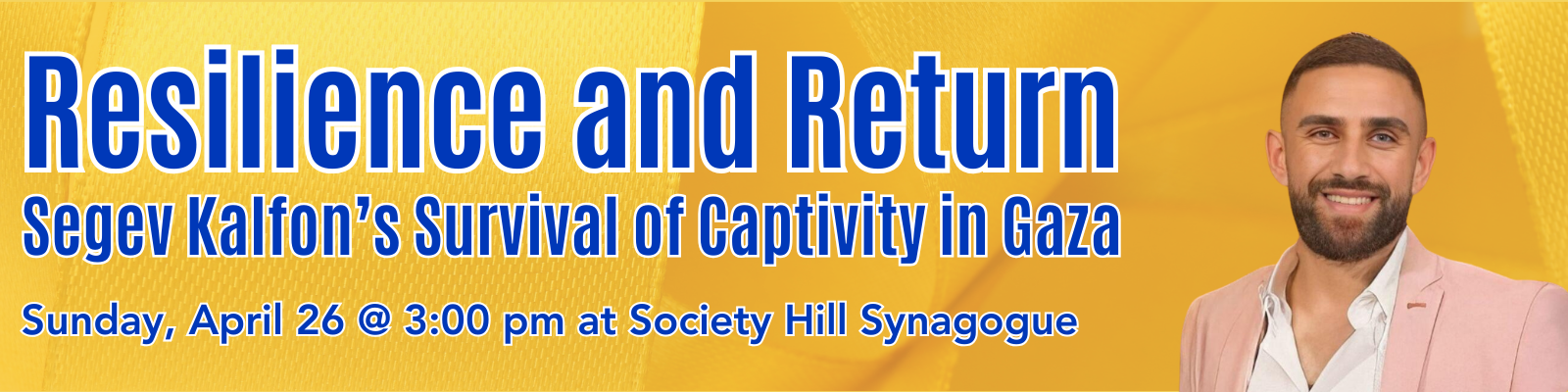
This week at Society Hill Synagogue, on Sunday at 3:00 pm, over 200 people are registered to attend an event at which we are hosting Segev Kalfon, an Israeli who was kidnapped from the Nova Music Festival on October 7, 2023, and survived 738 days of captivity in Gaza before his return home. Segev will discuss the strength, purpose, and hope that can emerge even in the darkest of circumstances.
Earlier in the week, we hosted a viewing, attended by 35 people, of the Joint Israeli-Palestinian Memorial Day Ceremony, a ceremony which brings together bereaved Israeli and Palestinian families to mourn their loved ones and affirm a shared commitment to peace.
Holding both of these events in the same week shows Society Hill Synagogue’s ongoing, profound commitment to a relationship to klal yisrael, the Jewish people in Israel and all around the world, a people within whom there are stark political differences and yet who are united by a shared commitment to one another.
Within this community, I experience those significant differences about Israel firsthand. I meet with community members who see the existence of the State of Israel as, for all intents and purposes, a miraculous development, given the generations of antisemitism that preceded its creation; who see a world in which antisemitism has been part of the fabric of civilization for generations; and who see criticism of Israel, even when grounded in facts, as being intensified by conscious and unconscious layers of antisemitism — who are worried about how that antisemitism is showing up in our schools, in our institutions, and in online dialogue.
I meet with other community members who are profoundly concerned about the direction Israel has taken, with settlers in the West Bank taking increasingly hostile and violent tactics against Palestinian residents, with insufficient oversight from the Israeli government; an increase in settlement building imperiling the prospects of long-term peace; and the lasting effects of the war in Gaza still taking a humanitarian toll.
On one level, those positions are not mutually exclusive. We can hold two truths at once. We can bear witness to a rising tide of antisemitism, recognizing that not all criticism of Israel is antisemitic — and yet recognizing that indeed some very much is. Just because something is facially about Israel doesn’t mean it cannot be grounded in antisemitism — in an instinct which sees the figure of “the Jew,” in whatever shape we take, as the embodiment of what is wrong with society. It is very plausible that we are witnessing this instinct at work.
We can hold this truth alongside the observation of certain developments in Israel — in which more fundamentalist pockets of the population are increasingly empowered, at both the grassroots and governmental levels — and have real concern for the future of Israeli and Palestinian civilians alike and for the prospects of peace.
These observations and these positions are not mutually exclusive. And even where there are profound disagreements, I am proud that we have managed to hold space here for a diversity of viewpoints on a relationship — our relationship to Israel — that is central to discourse in Jewish life. This is not an easy task. It will not always be implemented perfectly. But I am proud of our ongoing wrestling and engagement on these important questions in our communal lives.
Thank you to everyone who has taken part in bringing these events to our community.
What follows is the D’var Torah I offered this past Friday evening, the evening of Madeleine Mohajer’s Bat Mitzvah. We invite you to join us this coming Friday night, as we do every Friday night throughout the academic year.
This Friday night will be a Shabbat celebrating our New Members — we hope many longtime members attend to welcome our newest members, and we hope those considering membership will also attend, to experience this welcome into our community.
I’ve got a riddle for you.
Granted, it is a riddle rooted in the weekly Torah portion, so it may not be easy for everyone to solve; nonetheless I want to share it with you. The facts on which this riddle is based are totally true, and it goes as follows:
The Torah portion for Madeleine’s Bat Mitzvah is the same as the Torah portion I had for my Bar Mitzvah some 30 years ago. Maddie and I share a B’nei Mitzvah Torah portion.
Maddie also shares a Torah portion with her mom, Beth; Beth chanted the same Torah portion for her Bat Mitzvah that Maddie will be chanting tomorrow. Maddie and her mom share a Bat Mitzvah Torah portion.
So here’s the riddle: Maddie and I have the same Torah portion for our B’nei Mitzvah; Maddie and her mom have the same Torah portion for their B’not Mitzvah. But Beth and I do not have the same Torah portion for our B’nei Mitzvah.
A=B, and B=C. But A ≠ C. How can this be?
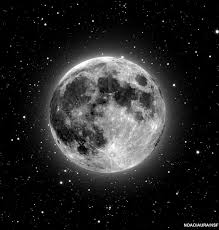
Judaism operates on multiple levels of time. Tonight is Rosh Hodesh, the new moon. Judaism is inherently connected to the rhythmic nature of cycles. Perhaps nothing represents this better than our interconnection with the moon. ‘Round and ’round, the moon orbits the earth, as the earth rotates around the sun. The interplay of the two allows us to see a waning and waxing moon in the night sky: night by night the moon shrinks from view, its crescent getting smaller and smaller. And yet, just when we think it’s gone for good, at the point of vanishing, there appears the smallest sliver, Rosh Hodesh, the new moon, and we exhale as it begins to get brighter and brighter. The moon waxes and wanes, the tides go in and out, we experience crescendos and quietings down, diminuendos, these rhythms, and cycles a part of our life.
There is a special Torah portion for this experience, Rosh Hodesh, which Maddie will be chanting tomorrow, and which her mom Beth, whose Bat Mitzvah also fell on Rosh Hodesh, also chanted. What a perfect embodiment of one way of experiencing time in Jewish life. The cycles return us again and again to similar points in our journey. Here we are in springtime, coming out of a long, cold winter, yet again. There were times it felt like winter would never end, and of course, it always does.
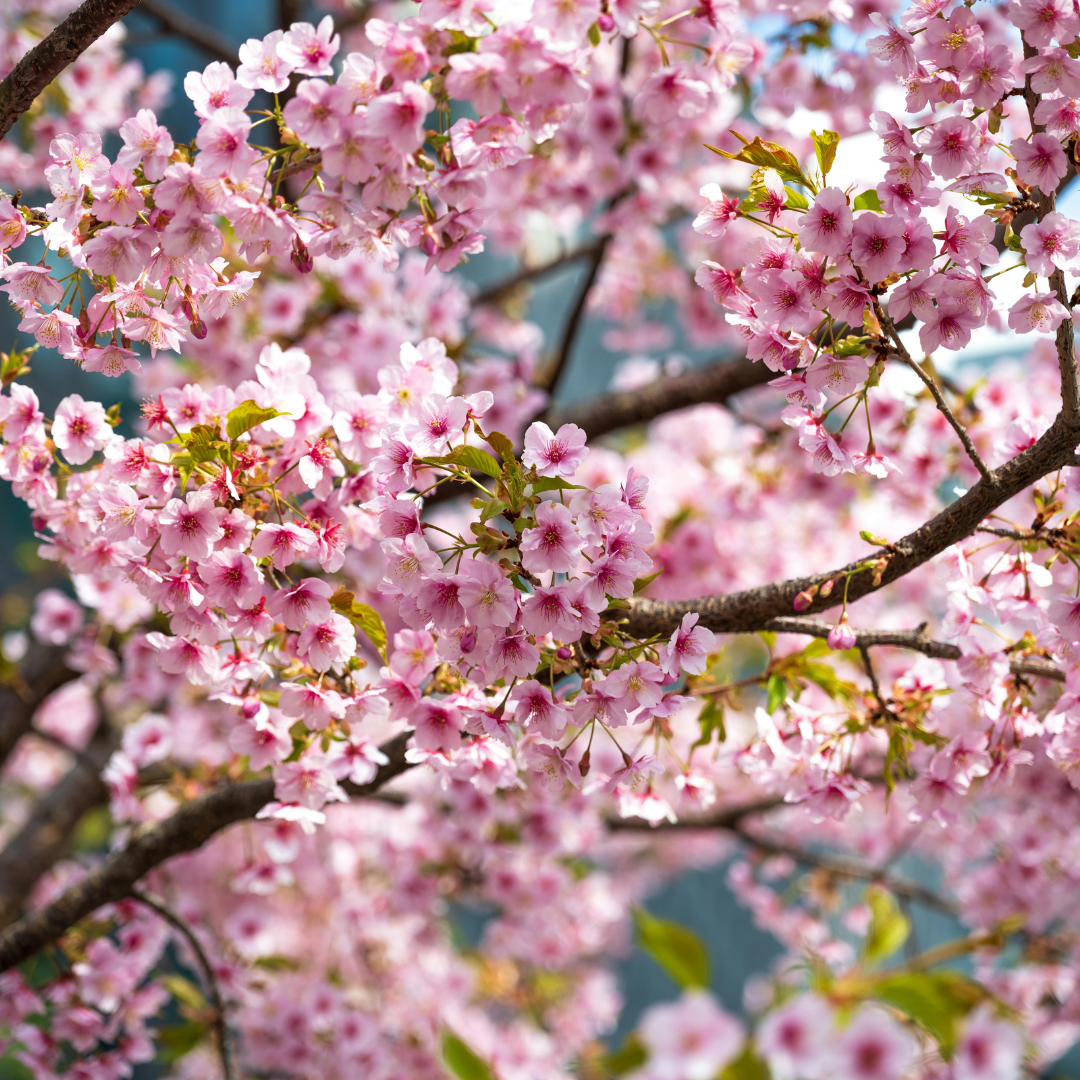
There is a cherry tree, which some of you may be able to see right now, which sits right outside my window, and it always knows when spring is here, it always knows when to blossom. Jewish time, punctuated by Rosh Hodesh and Shabbat, revolves around our annual cycle of holy days, writes scholar David Arnow, and each year we feel a sense of return when we experience that year’s cycle.
Of course, Judaism has another relationship to time; the world is not static. Each year, new petals blossom on the tree. B’reshit, in the beginning, “בָּרָ֣א אֱלֹהִ֑ים אֵ֥ת הַשָּׁמַ֖יִם וְאֵ֥ת הָאָֽרֶץ,” God created the heavens and the earth. Something new happened. A different relationship to existence.
While it has its own cyclical nature, Torah represents this arc of time. It begins with the creation of the world, and moves through deliverance — deliverance from the narrow place in which we found ourselves — through revelation, another earth-shattering moment when, according to Jewish tradition, the divine voice pierced the cosmic silence revealing to the people, to us, Torah, sacred ways of being in the world. And the arc continues, curving on until redemption when the earth’s shattering will be healed — such, at least, the Jewish story.
And that story is embodied in the weekly Torah portions, which begin with B’reshit, the beginning, and end as we are just about to enter the promised land and experience redemption. That story marches forward, week by week, and in that chronological progression, Maddie finds herself in parshat Tazria-Metzora, about midway through the book of Vayikra, Leviticus, the book identifying different ways for us to bring holiness into the world. When I was thirteen, I had this Torah portion too.
And that year, by the way, it did not fall on Rosh Hodesh, so I had no special Torah portion.
Maddie does. The solution to the riddle is that her Bat Mitzvah signals these two layers of time: on the one hand, there is peace in the perpetual cyclical nature of our lives; each year we come upon our birthday once again; each year we experience the seasons, the cycle of the Jewish year, from Rosh Hashanah and Yom Kippur to Sukkot, Hanukkah and Purim, Pesah, on our way to Shavuot and back around again.
At the same time, each year we are not quite the same; each new moon has brought us different, new experiences, and we have impacted the world and those around us in different ways. We are changed. There are new petals on the cherry blossoms.
Later on in B’reshit, in Genesis, it notes that Adam, the first human being, was made from Adamah, earth, and says that we will return to the earth, for from it we were taken; “for dust you are, and to dust you shall return.”
And yet Jewish tradition also suggests this is not regular dust, but stardust. Permeated by the sparks of light that were scattered and spread throughout the universe upon its creation.
As Arnow writes, Judaism says that we reckon time in two ways: “the cyclical aspect of time roots and strengthens us as we tap into the power of the natural world’s enduring rhythms. The directional aspect of time inspires us to use that strength to change the world, to push it, however slowly, from what it is today to what it can become tomorrow.”
We’re grateful that Maddie’s Bat Mitzvah Shabbat holds these two elements of time together; grateful that her parents have the opportunity to feel both the cyclical nature of time, and its passage.
Wishing us all a Shabbat of holiness, sacredness, and peace.

 This week at Society Hill Synagogue, on Sunday at 3:00 pm, over 200 people are registered to attend an event at which we are hosting Segev Kalfon, an Israeli who was kidnapped from the Nova Music Festival on October 7, 2023, and survived 738 days of captivity in Gaza before his return home. Segev will discuss the strength, purpose, and hope that can emerge even in the darkest of circumstances.
 Judaism operates on multiple levels of time. Tonight is Rosh Hodesh, the new moon. Judaism is inherently connected to the rhythmic nature of cycles. Perhaps nothing represents this better than our interconnection with the moon. ‘Round and ’round, the moon orbits the earth, as the earth rotates around the sun. The interplay of the two allows us to see a waning and waxing moon in the night sky: night by night the moon shrinks from view, its crescent getting smaller and smaller. And yet, just when we think it’s gone for good, at the point of vanishing, there appears the smallest sliver, Rosh Hodesh, the new moon, and we exhale as it begins to get brighter and brighter. The moon waxes and wanes, the tides go in and out, we experience crescendos and quietings down, diminuendos, these rhythms, and cycles a part of our life.
 There is a cherry tree, which some of you may be able to see right now, which sits right outside my window, and it always knows when spring is here, it always knows when to blossom. Jewish time, punctuated by Rosh Hodesh and Shabbat, revolves around our annual cycle of holy days, writes scholar David Arnow, and each year we feel a sense of return when we experience that year’s cycle.
 Later on in B’reshit, in Genesis, it notes that Adam, the first human being, was made from Adamah, earth, and says that we will return to the earth, for from it we were taken; “for dust you are, and to dust you shall return.”