Hazzan Jessi: Artemis, Torah, and the Exact Middle of Everything
by Hazzan Jessi Roemer
I hope you are faring well this week in the warmer weather. Following is the d’var Torah I offered last Friday night at our TGIShabbat service:
Shabbat Shalom. In roughly one hour, the astronauts from Artemis II will, we hope, splash down safely into the Pacific Ocean.
It is amazing what we earthlings are able to build.
Josh, my spouse, is teaching our son, Nati, carpentry. For completely impractical creative types (like me), it is inspiring — and completely baffling — that there are humans who are able to master the physical world by counting and measuring it. Using numbers and planning their moves ahead of time, these people cut and cobble physical elements — wood, paper, steel — into forms that stand up! Or hold something! Or fly!
This is amazing to me, especially because I tend to truck in realms that are not so easy to measure with numbers or outlines — I write iteratively and revise endlessly; I compose music in no predictable way; I attend to ritual around cycles of human life and death. These realms cannot be conquered with a ruler, nor can their dimensions be predicted with accuracy, because only at the end of something are you able to locate where the middle was. In the big picture of our own lives, we have a sense of where the beginning is, though there are varying opinions on that, too, but we have absolutely no idea when or where the end is — until it’s upon us.
In my seminary, we had a running joke about the “vast middle” of our program, an amorphous entity in which students would find themselves for a few years or longer, depending on how quickly their life circumstances allowed them to finish their studies, and at what point their teachers decided they were ready to be clergy. We joked about it because it was simultaneously exciting and uncomfortable to be in that vast middle space, unsure when we’d hit the midpoint, or if we’d passed it.
We humans like to nail things down; it gives us a feeling of control. Bumping up against the “vast middle” we find ourselves in for much of our lives, we sometimes freak out. It may be fair to say that a lot of what we struggle with in our lifetimes is this tension between measuring and predicting things in order to live our lives, and surrendering to the knowledge that many dimensions — including the biggest ones — are out of our control and a mystery for most, if not all, of our time here.
People who scribe Torot (Torahs) are called sofrim – singular: sofer. Sofer, literally, is not “someone who scribes,” but “someone who counts.” This is because the most important part of a sofer’s job is counting the letters they are committing to parchment, making sure they have the exact right number and are not leaving out even one letter. In Jewish tradition, every letter of the Torah is from God, and one letter can tell an entire story.
Remember the movie Hidden Figures, and the importance of the mathematicians making those calculations for that other space flight decades ago? Torah scribing uses the same rationale: one missed count, and the whole flight could be jeopardized.
With all this counting — we know where the Torah begins, we know where it ends, and the number of letters is always the same — you’d think it would be easy to find the exact midpoint of the Torah.
And yet.
The scholars in our tradition were wiser than to imply that the Etz Hayim, the Torah, the Tree of Life, should be less complex and multi-faceted than its namesake, life itself. Their answer to the question, “Where is the middle of the Torah?” is simultaneously exacting and amorphous, as well as being classically Jewish. Are you ready for the answer?
The answer is: it depends. “What does it depend on?” you may ask. And of course, this question is answered with another question: which “middle” are you looking for?
The Talmud identifies several exact middles of the Torah — the middle portion, the middle verse, the middle word, the middle letter. And guess what? They do not overlap! Two of them (the middle word and the middle letter) are in this week’s Torah portion, Shmini, which is (like the sofrim) all about the importance of being scrupulous and exacting in the execution of spiritual service.
Two of Aharon’s sons in the family of priests die at the start of the parashah, because they brought “strange fire” to worship God. We don’t know exactly what that means, but it’s implied that they were not exacting enough in their priestly ministrations, and the power they were dealing with therefore overwhelmed and killed them. Immediately afterward, two more of Aharon’s sons — perhaps because they are in mourning — refrain from their priestly duty of eating the sacrificial meat set aside for them.
The Talmud claims that the middle word of the Torah falls exactly where Moshe inquires as to why the living sons have not fulfilled their priestly duty. The sentence reads: “Daroshdarash Moshe” — Moshe inquired thoroughly about the matter. You may recognize the word “darash” here — it sounds like “drash,” like what I am doing now: an act of inquiring into the meaning of something. The root of this word also means, “to demand,” which adds a forceful quality to Moshe’s inquiry.
So this word, “darash,” is what the Talmudic rabbis say is the middle word of the Torah.
Now, I have not counted the words of the Torah myself, but I am told by those who have that — surprise! — numerically, darash is not, in fact, the middle word of the Torah.
But, I am also told that the rabbis here are not counting single words; they are actually counting the number of times — apparently, 77 times — that a double word appears in the Torah for emphasis — as in, “Avraham, Avraham,” or “Noah, Noah.” Of those appearances of double words, “darosh darash” is the middle one. So, darash is both the exact middle word, and the not exact middle word, of the Torah.
I love this for so many reasons.
First, the Talmudic rabbis have declared that the word at the center of the Torah is darash — a term that emphasizes the importance of being curious, rigorous, and exacting. And yet, the rabbis themselves cannot pick one paradigm by which to measure the center of the Torah; by their calculations, the Torah has several centers! This abundance of exact middles points to the fact that Judaism is never as interested in finding one singular fixed point as it is in investigating a multiplicity of points, and the transitions between them — that’s where Judaism’s jam really is.
Second, this abundance of middles speaks to our larger conundrum about identifying the end and midpoint of our lives. By asking, “which midpoint do you mean?” we open up the possibility that every point can be a midpoint, depending on how and what you choose to count.
So we count, and we measure, and we create containers for ourselves — both physical and metaphorical. We build amazing structures, increase our healing ability, build large systems to help us navigate and celebrate the absolute mystery of being here. But we remain aware that what we call the beginning, middle, and end of anything depends entirely on what we are looking for, and what we choose to see.
I find this encouraging, especially in this moment in our world when we are in the “vast middle” of several things we wish would end, so that new, better things can begin. Perhaps if we can decide what to look for, and hold that new endings and beginnings are possible at any time, we can better weather the uncertainty of this time, and perhaps thrive — or even fly.
With blessings for a good rest of your week and new month of Iyar,

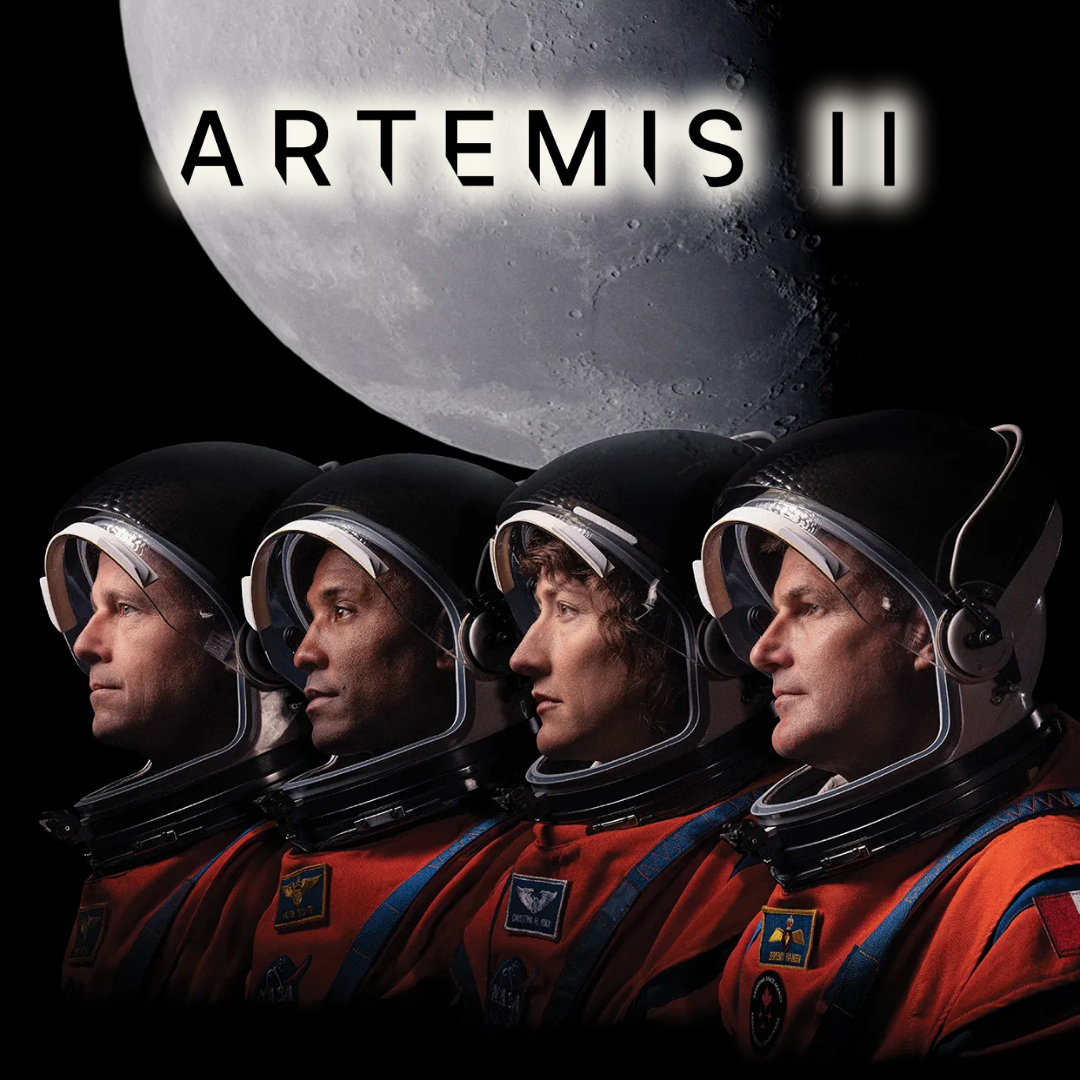 Shabbat Shalom. In roughly one hour, the astronauts from Artemis II will, we hope, splash down safely into the Pacific Ocean.
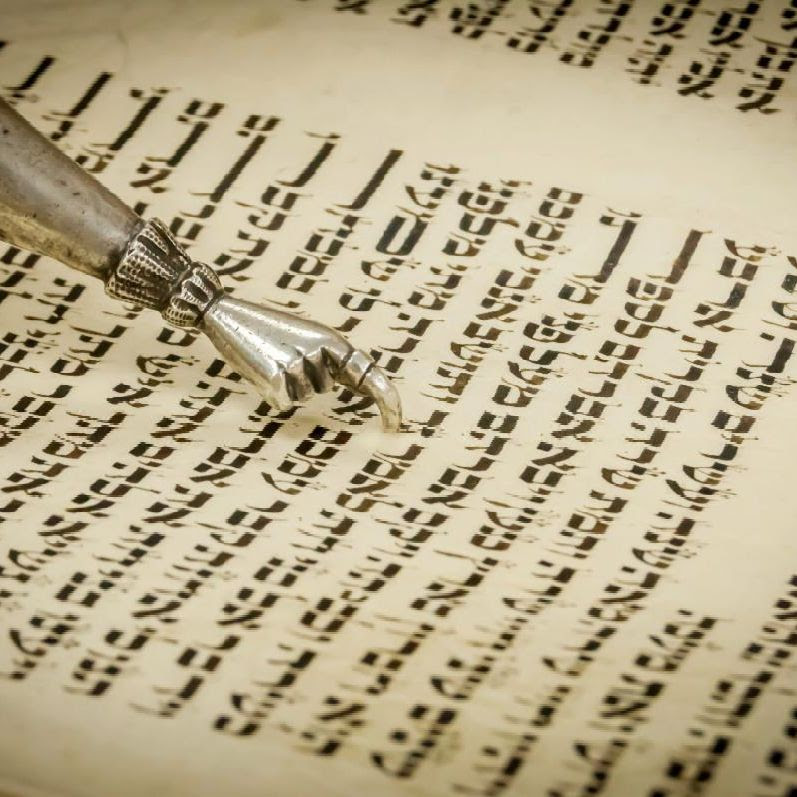 People who scribe Torot (Torahs) are called sofrim – singular: sofer. Sofer, literally, is not “someone who scribes,” but “someone who counts.” This is because the most important part of a sofer’s job is counting the letters they are committing to parchment, making sure they have the exact right number and are not leaving out even one letter. In Jewish tradition, every letter of the Torah is from God, and one letter can tell an entire story.
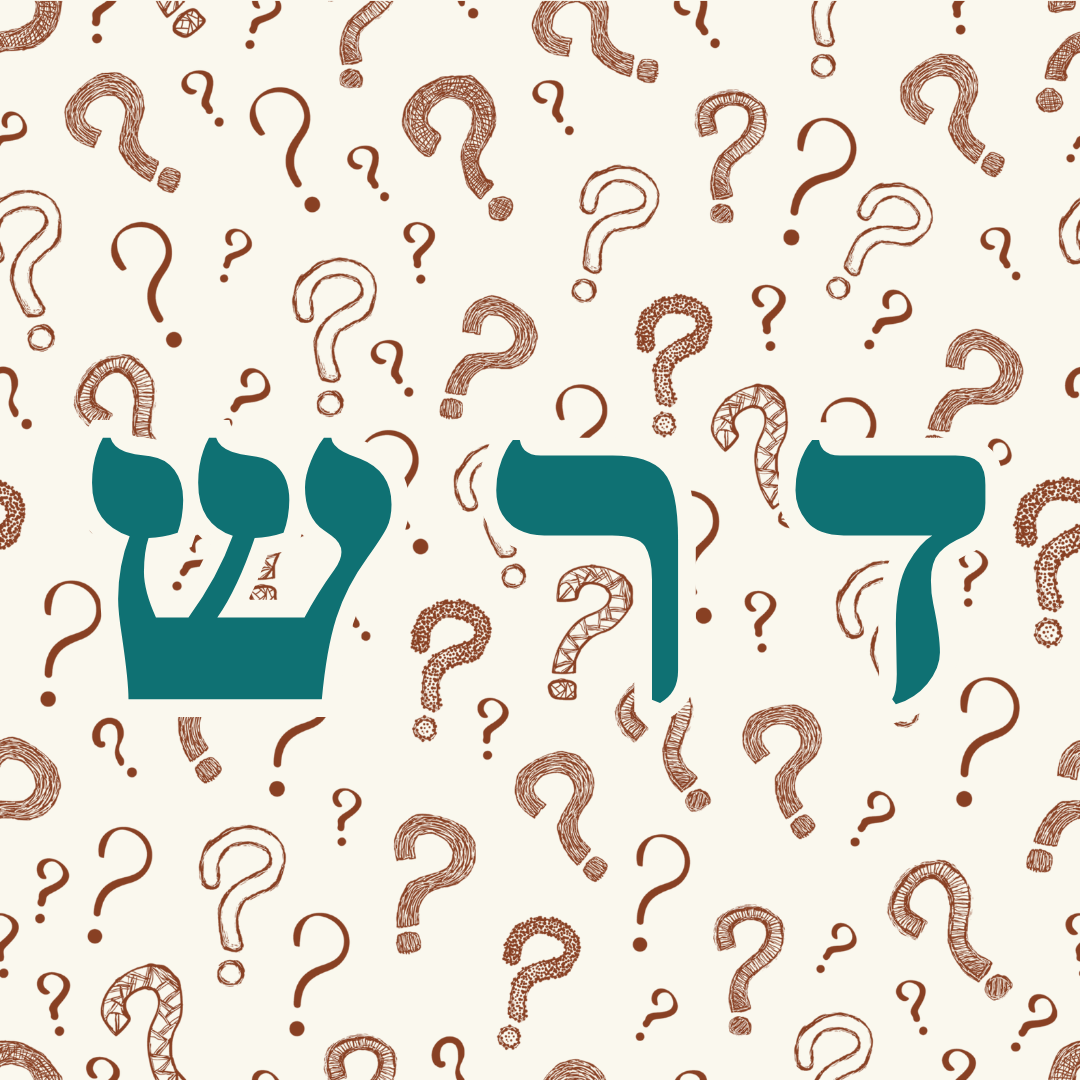 The Talmud claims that the middle word of the Torah falls exactly where Moshe inquires as to why the living sons have not fulfilled their priestly duty. The sentence reads: “Darosh darash Moshe” — Moshe inquired thoroughly about the matter. You may recognize the word “darash” here — it sounds like “drash,” like what I am doing now: an act of inquiring into the meaning of something. The root of this word also means, “to demand,” which adds a forceful quality to Moshe’s inquiry.
 Second, this abundance of middles speaks to our larger conundrum about identifying the end and midpoint of our lives. By asking, “which midpoint do you mean?” we open up the possibility that every point can be a midpoint, depending on how and what you choose to count.