Halfway around the world, violence continues in the middle east, with Jews no strangers to being victims or perpetrators. As a recent report shared, “hundreds of Israeli settlers have been terrorizing Palestinians with near-impunity all year.” The Rabbinical Assembly, the global association of Conservative/Masorti rabbis, condemned the violence, writing, “we are deeply alarmed by the violence, harassment, and terror being committed by Jewish extremists against Palestinians in the West Bank. Even amid the real threats of terror and violence that Israelis face every day, there can be no justification for attacks on innocent people or their property. We are witnessing a shocking and growing pattern that inflicts harm, spreads fear, and profoundly damages the fabric of life shared by Israelis and Palestinians. Jewish tradition does not permit us to look away from such acts, and terrorism and intimidation committed by extremists in the name of the Jewish people cannot be reconciled with the values we hold sacred.”
This is well stated.
We can hold multiple truths: that fellow Jews are acting in ways we deplore. We call them out and we condemn their actions.
And we can also call out the demonization of all Jews and Israelis as deplorable. Antisemitism is one of the oldest hatreds and it continues to shape shift and show up in ways that identify the figure of the Jew, or the Jewish nation-state, as that which is most representative of evil in the world. We reject that, too. No people should be entirely conflated with the actions of some of its members.
We pray for a world in which each people collectively, and each person individually, is held with the kavod — dignity/honor — they deserve; God created humankind in the divine image, creating it — creating us, each one of us — in the image of God (Genesis 1:27).
This past week in our weekly Torah study on Saturday mornings we studied another of our most famous verses in Torah alighting on questions of justice: Tzedek, tzedek tirdof, the verse reads: “Justice, justice shall you pursue.” Moses proclaims these words to the people at the end of their wilderness journey, just before they enter the promised land without him, articulating in full, “Justice, justice shall you pursue that you may thrive and occupy the land that the ETERNAL your God is giving you” (Deuteronomy 16:20).
This has served as a rallying call for Jews, centering our pursuit of justice throughout the generations.
For those spending time studying Torah, one of the questions that has always stood out is, why the repetition of the word “justice”? This is a somewhat unusual (though not entirely unique) occurrence in Torah known by modern scholars as an epizeuxis, defined as the “immediate repetition of a word or phrase for rhetorical or poetic effect.”
For the ancient rabbis, however, such lingusitc pheonemona are never “merely” for “rhetorical or poetic effect;” they are portals into eternal teachings, and successive rabbis have expounded on their possible meaning. As Rabbi Joseph Telushkin writes, “The repetition of the word ‘justice” in this verse in Deuteronomy is interpreted by some as implying that means, as well as ends, must be just.” In our pursuit of justice, the double-use of the word tzedek/justice implies, we can’t assume the ends justify the means.
Alternatively, he continues, “Justice also is regarded as binding on God as well as human beings.” One “justice” means the justice binding on us, the other the justice binding on God, citing the example of Abraham fighting to preserve the lives of possible innocent people in Sodom and Gomorrah. When it appears God is about to destroy these cities without seeking out whether there are innocents in them, Abraham declares, “Will the Judge of all the earth not act with justice?” (Genesis 18:25). (One of our Torah study participants asked what it might mean for us human beings to help actualize the justice that is binding upon God if God does not do it God’s Self.)
The rabbis of the Talmud say that the first use of the word “justice” means there are times we pursue justice with vigilance, and the second use means there are times we pursue justice through compromise (Sanhedrin 32b).
Finally, one Jewish folk tale asks whether one justice refers to justice out in the world while the other refers to it within ourselves, assuring us that it will not be a successful pursuit of justice if we do the former without the latter. This story goes as follows (from Ha-Ba’al ha-Ketanah, as found in Tree of Souls: The Mythology of Judaism, by Howard Schwartz):
There once was a Jew who went out into the world to seek justice. Somewhere, he was certain, true justice must exist, but he had never found it. So he set out on a quest that lasted for many years. He went from town to town and village to village, and everywhere he went, he searched for justice, but never did he find it.
In this way many years passed, until the man had explored all of the known world except for one last, great forest. He entered that dark forest without hesitation, for by now he was fearless, and he went everywhere in it. He went into the caves of thieves, but they mocked him and said, “Do you expect to find justice here?” And he went into the huts of witches, where they were stirring their brews, but they laughed at him and said, “Do you expect to find justice here?”
The man went deeper and deeper into that forest, until at last he arrived at a little clay hut. Through the window he saw many flickering flames, and he was curious about them. So he went to the door and knocked. No answer. He knocked again. Nothing. At last he pushed the door open and stepped inside.
Now, as soon as he stepped inside that cottage, the man realized that it was much larger on the inside than it had seemed to be from the outside. It was filled with hundreds of shelves, and on every shelf there were dozens of oil candles. Some of those candles were in precious holders of gold or silver or marble, and some were in cheap holders of clay or tin. And some of the holders were filled with oil and the flames burned brightly, while others had very little oil left.
All at once an old man, with a long, white beard, wearing a white robe, appeared before him. “Shalom aleikhem, my son” the old man said. “How can I help you?” The man replied, “Aleikhem shalom. I have gone everywhere searching for justice, but never have I seen anything like this. Tell me, what are all these candles?”
The old man said, “Each of these candles is the candle of a person’s soul. As long as the candle continues to burn that person remains alive. But when the candle burns out that person’s soul takes leave of this world.”
The man asked, “Can you show me the candle of my soul?”
“Follow me,” the old man said, and he led him through that long labyrinth of a cottage, which the man now saw must be endless. At last they reached a low shelf, and there the old man pointed to a candle in a holder of clay and said, “That is the candle of your soul.”
Now the man took one look at that flickering candle, and a great fear fell upon him, for the wick of that candle was very short, and there was very little oil left, and it looked as if at any moment the wick would slide into the oil and sputter out. He began to tremble. Could the end could be so near without his knowing it? Then he noticed the candle next to his own, also in a clay holder, but that one was full of oil, and its wick was long and straight and its flame burned brightly. “And whose candle is that?” the man asked. “I can only reveal each man’s candle to himself alone,” the old man said, and he turned and left.
The man stood there, quaking. All at once he heard a sputtering sound, and when he looked up, he saw smoke rising from another shelf, and he knew that somewhere, someone was no longer among the living. He looked back at his own candle and saw that there were only a few drops of oil left. Then he looked again at the candle next to his own, so full of oil, and a terrible thought entered his mind.
He stepped back and searched for the old man in every corner of the cottage, but he didn’t see him anywhere. Then he picked up the candle next to his own and lifted it up above his own. At that instant the old man appeared out of nowhere and gripped his arm with a grip like iron. And the old man said: “Is this the kind of justice you are seeking?”
The man closed his eyes because it hurt so much. And when he opened his eyes, he saw that the old man was gone, and the cottage and the candles had all disappeared. And he found himself standing alone in the forest and he heard the trees whispering his fate. And he wondered, had his candle burned out? Was he, too, no longer among the living?

 There once was a Jew who went out into the world to seek justice. Somewhere, he was certain, true justice must exist, but he had never found it. So he set out on a quest that lasted for many years. He went from town to town and village to village, and everywhere he went, he searched for justice, but never did he find it.
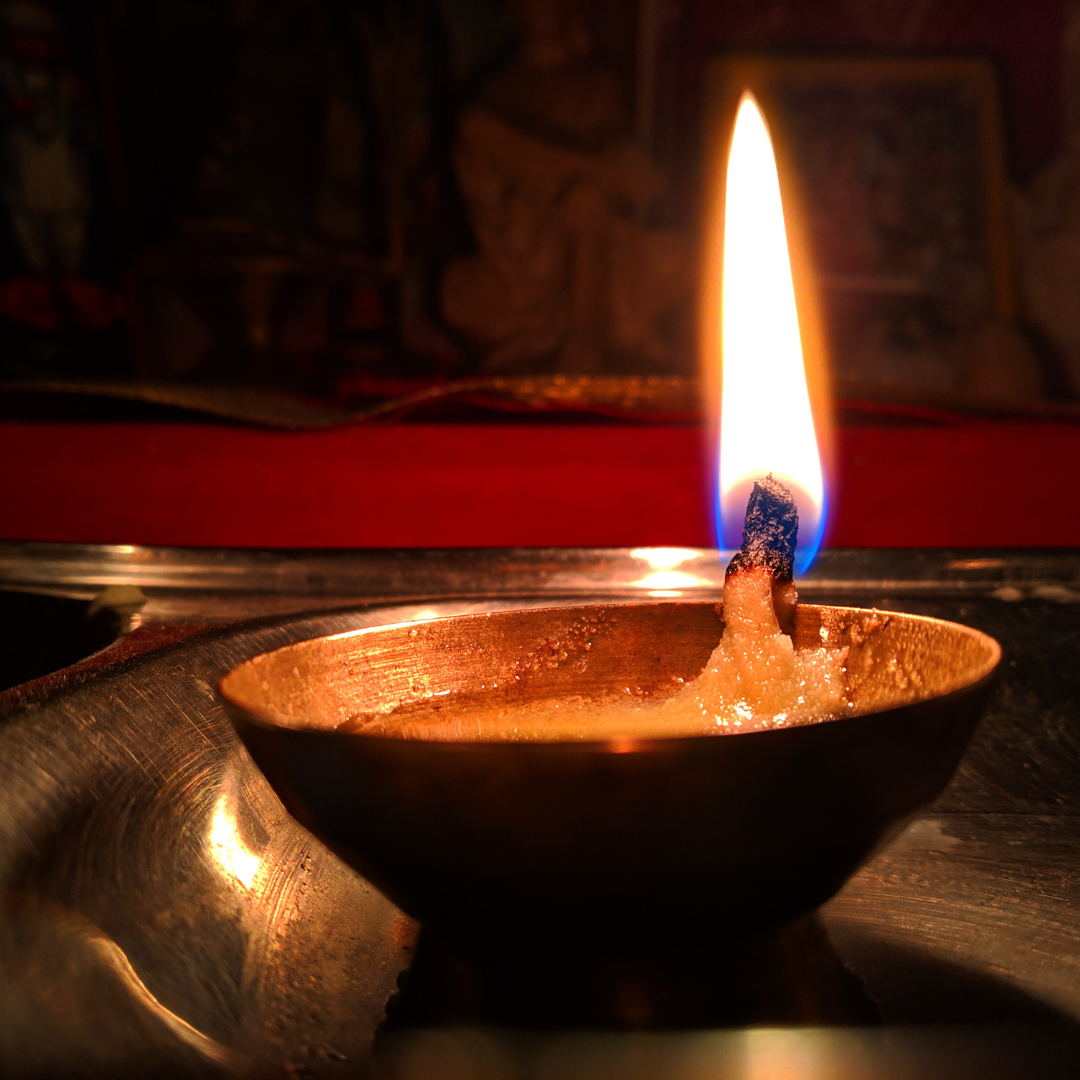 Now the man took one look at that flickering candle, and a great fear fell upon him, for the wick of that candle was very short, and there was very little oil left, and it looked as if at any moment the wick would slide into the oil and sputter out. He began to tremble. Could the end could be so near without his knowing it? Then he noticed the candle next to his own, also in a clay holder, but that one was full of oil, and its wick was long and straight and its flame burned brightly. “And whose candle is that?” the man asked. “I can only reveal each man’s candle to himself alone,” the old man said, and he turned and left.