I hope you’ll join us Saturday night, October 3 for a rousing Simhat Torah! This is one of the high points of the Jewish year: dinner and drinks, festive dancing with the Torah scrolls, flags waving throughout the sanctuary by people of all ages — it is essentially the culmination of the holiday season: a celebratory exhale, feeling joyous about the year ahead even knowing there will be challenges. You don’t want to miss it. 5:30 dinner, 6:15 service and dancing with the Torah scrolls.
Now is also the time to register for our annual course Nuts & Bolts: A (re)Introduction to Judaism, which starts this coming Tuesday, October 6.This course is open to a range of audiences: those preparing for conversion to Judaism, those looking to re-explore the foundations of a tradition that has been with them throughout their lives, or those simply looking for a basic introduction to Jewish life. Feel free to register yourself or forward to a friend; the course is open to both the general public and to members.
And be sure to register for our upcoming Scholar-in-Residence Shabbat on October 30 and 31 with Rabbi Josh Feigelson, the President and CEO of the Institute for Jewish Spirituality. He’ll speak onwhat Judaism has to teach us about tension between home and exile — and what it can teach us about living with uncertainty today. How can we cultivate a genuine sense of at-homeness even when the world around us feels unsettled? And how might Jewish spiritual practice help us remain grounded, connected, and openhearted in turbulent times?
Finally, I leave you with the drash (teaching) I offered this past Friday night to the community on the eve of Sukkot:
I am one of those grumpy people who for a long time didn’t understand why anyone would list Sukkot as their favorite Jewish holiday. I always was, and probably still am, a Pesah/Passover guy. Pesah has always felt so quintessentially Jewish to me — we’re sitting around a table, indoors, exploring, debating, arguing about Jewish texts. It’s filled with talking and dialogue and questions and study. For years, I assumed, “this is Judaism. Text, talk, and tastes. What could be more Jewish?”
But Judaism has been around for 3,000 years and has taken on many different flavors and many different experiences. The more I’ve reflected on it and experienced it, Sukkot is also quintessentially Jewish, because there is a foundational experience to Jewish life that Sukkot embodies, one that, on some level, we are still experiencing, even if we sometimes feel disconnected from it. And that experience is, in a word, the wilderness.
As Rabbi Richard Hirsh writes, “As is the case with many Jewish holiday celebrations, Sukkot requires us to step back in time not only to recall historical experiences, but also to reenact the essence of them. For seven days we bring the experience of the wilderness to our own private and communal backyards by building temporary sukkot and, according to tradition, living in them as we would in our own homes. We gather branches and fruit in the form of the lulav and etrog and each day shake them toward the corners of the universe to invoke the Source of Abundance around us. These practices,” he concludes, “evoke a time when awareness of and connection to nature were essential for survival and rituals often involved tangible physical action beyond prayer and study.”
My grumpy self used to roll my eyes a bit when people would say they found God in nature, in a beautiful sunset, in ocean waves, in blue-tinted mountains. Ah, one more “spiritual but not religious” type, I grumbled to myself. “Religion,” to quote Rabbi Sandy Sasso, “is the container of the life of the spirit. It is the gravity that anchors spirit to earth, translating the vision of the soul into the responsibility of the individual… The soul’s most profound experiences with a presence greater than the self,” she continues, “are given form and articulation through liturgy, ritual, and moral law… Religion can test spiritual vision in the crucible of community and history.”
Find yourself a beit midrash (house of study), I would think. I know organized religion gets a bad rap sometimes, but I promise you that you can find God in the middle of a text study with two students going back and forth.
But, reflecting on this wilderness wandering experience of our ancestors, on, as Barbara Breitman writes, “the sense of awe and holiness that our ancestors felt as members of an indigenous, agrarian society,” we remember that it’s not not-Jewish to find God in nature; it’s very Jewish. As my teacher Tamar Kamionkowski writes, “those who say that they find God primarily in the mountains or on a desert trek are part of a tradition within Judaism that spans thousands of years.”
As it says in Sefer Vayikra, the Book of Leviticus, “You shall dwell in sukkot seven days; in order that future generations may know that I caused the Israelite people to dwell in sukkot when I brought them out of the land of Egypt,” in the wilderness on their way to the promised land. We are reconnecting with one of our foundational experiences as a people when we sit outside, feeling the wind cut through, giving up on our illusions that we can control the temperature, let alone all of our lives.
In fact, as Rabbi Elliot Tepperman, the new President and CEO of Reconstructing Judaism, writes, “Sukkot compels us to be outside to connect more with the natural environment. When sukkot falls, the air is just starting to chill. After the warm summer it is tempting to head to indoor comforts. One of the pleasures of this holiday is its gentle nudge encouraging us to be outside even when the weather is no longer “perfect.” This push allows us to rediscover the spiritual dimension of being outside.”
So there is the spiritual dimension of reminding ourselves of our wilderness journey, and the spiritual dimension of simply being outside.
One of the great sages in the history of Jewish life wrote the following: “The best remedy for those who are afraid, lonely, or unhappy is to go outside, somewhere where they can be quiet, alone with the heavens, nature, and God. Because only then does one feel that all is as it should be.” The sage who taught this was none other than Anne Frank, someone who I imagine would have given anything at certain moments to be able to go outside.
I talked on Yom Kippur about how it is becoming easier and easier to be more sealed off from the world around us. The conveniences of Amazon deliveries and DoorDash, streaming content and Zoom meetings. More and more we can live a full life without needing to leave the confines of our homes. Now don’t get me wrong, I love the comforts of my couch as much as anyone. And in some circumstances, for those with disabilities, for example, those conveniences are important; they’re not just conveniences, they are transformative.
But for many of us, it is far too easy to cut ourselves off from the people around us, and from the outside world. Sukkot comes to tell us, not yet. My teacher Bobbi Breitman suggests that on Sukkot “we are being called to recover our sense of wonder at creation, to reawaken a sense of connection with the earth. We have spiritual experiences in nature,” she writes, “because of a felt sense of participation in the more-than-human wildness that is the primary sacred reality of creation.”
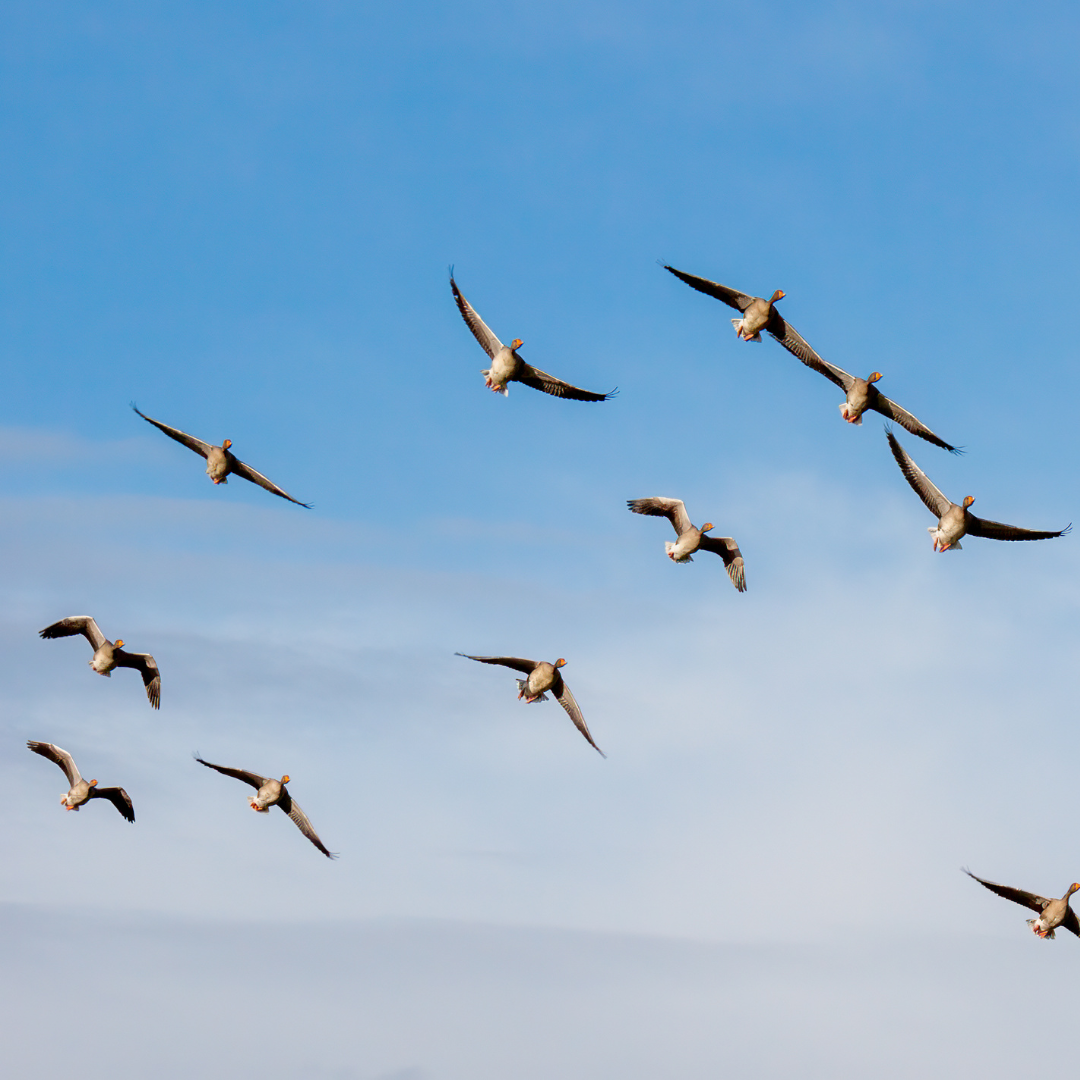
A felt sense of participation in the more-than-human wildness that is the primary sacred reality of creation. This reminds me of the popular poem by Mary Oliver I’ve shared before, which makes sense as a bridge from Rosh Hashanah and Yom Kippur to Sukkot, called Wild Geese:
You do not have to be good.
You do not have to walk on your knees
For a hundred miles through the desert, repenting.
You only have to let the soft animal of your body
love what it loves.
Tell me about despair, yours, and I will tell you mine.
Meanwhile the world goes on.
Meanwhile the sun and the clear pebbles of the rain
are moving across the landscapes,
over the prairies and the deep trees,
the mountains and the rivers.
Meanwhile the wild geese, high in the clean blue air,
are heading home again.
Whoever you are, no matter how lonely,
the world offers itself to your imagination,
calls to you like the wild geese, harsh and exciting—
over and over announcing your place
in the family of things.
May we all hear the world calling out to us, may we experience that wildness, that wilderness, in the shelter of our sukkot.
Shabbat Shalom and Mo’adim Lesimhah — to a joyous week of Sukkot,

 I hope you’ll join us Saturday night, October 3 for a rousing Simhat Torah! This is one of the high points of the Jewish year: dinner and drinks, festive dancing with the Torah scrolls, flags waving throughout the sanctuary by people of all ages — it is essentially the culmination of the holiday season: a celebratory exhale, feeling joyous about the year ahead even knowing there will be challenges. You don’t want to miss it. 5:30 dinner, 6:15 service and dancing with the Torah scrolls.
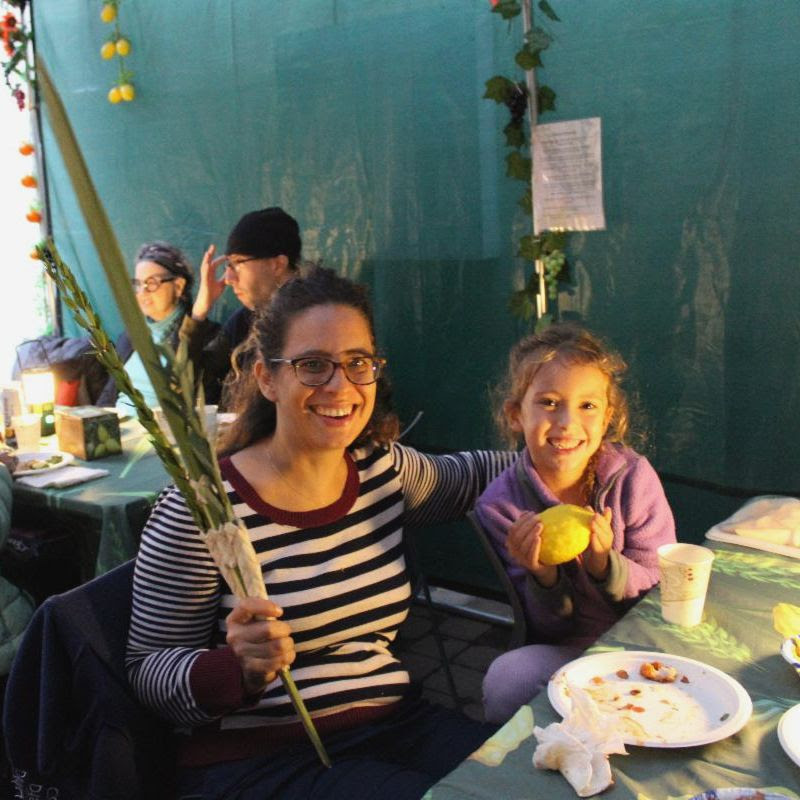 As Rabbi Richard Hirsh writes, “As is the case with many Jewish holiday celebrations, Sukkot requires us to step back in time not only to recall historical experiences, but also to reenact the essence of them. For seven days we bring the experience of the wilderness to our own private and communal backyards by building temporary sukkot and, according to tradition, living in them as we would in our own homes. We gather branches and fruit in the form of the lulav and etrog and each day shake them toward the corners of the universe to invoke the Source of Abundance around us. These practices,” he concludes, “evoke a time when awareness of and connection to nature were essential for survival and rituals often involved tangible physical action beyond prayer and study.”
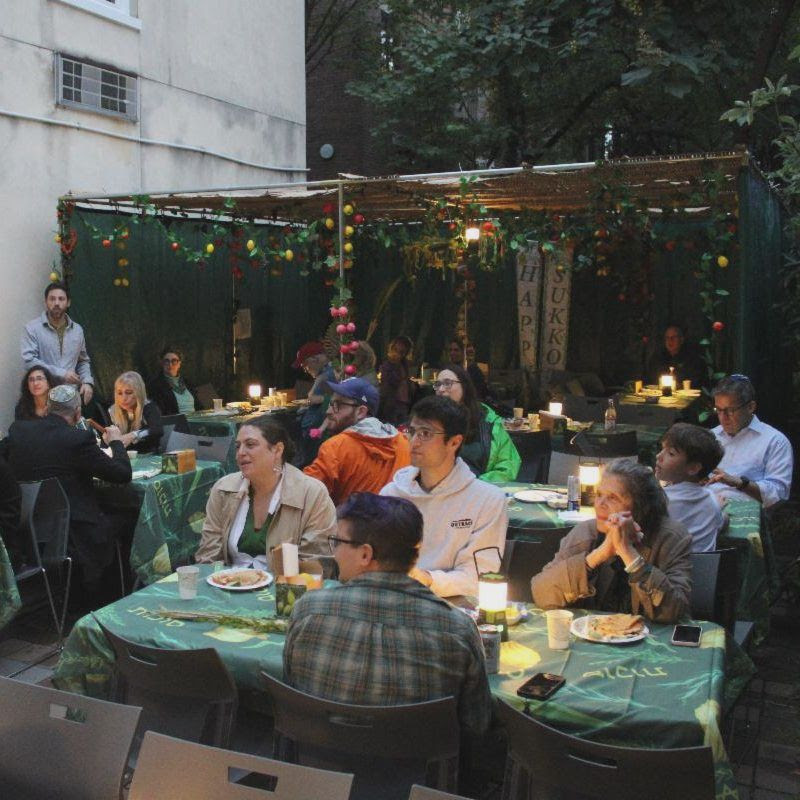 In fact, as Rabbi Elliot Tepperman, the new President and CEO of Reconstructing Judaism, writes, “Sukkot compels us to be outside to connect more with the natural environment. When sukkot falls, the air is just starting to chill. After the warm summer it is tempting to head to indoor comforts. One of the pleasures of this holiday is its gentle nudge encouraging us to be outside even when the weather is no longer “perfect.” This push allows us to rediscover the spiritual dimension of being outside.”
 You do not have to be good.