Annual Meeting season is upon us. (Have five more exciting words in the English language ever been written?) While perhaps not something we’ve often imagined as part of the sacred cycle of the Jewish year, I have come to experience the Congregation Annual Meeting as a sterling expression of Jewish community.
When we come to the synagogue on the Yamim Nora’im — the High Holidays/Days of Awe — to experience a packed Sanctuary and Social Hall, we sometimes reflect on how much work must have goneinto preparing liturgy and sermons, mailing out tickets, and printing handouts. But in fact, the work of synagogue life — of sustaining Jewish community, ensuring the community is there for us when we need it, preparing the next generation to take the torch, and helping us withstand, endure, and thrive amidst the throes of this challenging climate we face — takes place year round. It happens with each membership dues check, each volunteer committee decision, each greeter who welcomes people to services, and each Hesed visit to bring someone soup.
As we build our community, we engage in the practice of self-governance and self-organization as Jewish kehilot (communities) have done for centuries. We organize ourselves so that we have a mission, vision, and values, and a plan for how to achieve what we seek to do. In our case, we seek to nourish, strengthen, and inspire our members, their families, and the surrounding community through the rhythms and teachings of Jewish life.
I feel so moved each year when so many people show up to attend, not a program with a high-profile speaker or a concert with a renowned musician — though we’ve got plenty of each at Society Hill Synagogue — but simply a collective gathering in which we contribute, in an ongoing way, to the sacred work of building community. I hope you’ll join us on Wednesday, June 3, in our Social Hall for dinner from 6:15-7:00 pm, and our Synagogue Annual Meeting from 7:00-9:00 pm. RSVP here.
Speaking of dynamic programs, I hope you’ll also consider attending what is sure to be an enriching and thought provoking book talk Partly Strong, Partly Broken. This is a new novel by Society Hill Synagogue member and author Nathaniel Popkin on the fractious work of sustaining Jewish community in the days leading up to October 7, 2023. Nathaniel, journalist Hannah Filreis Albertine, and I will discuss the themes of the book, which reflect on the wrestling that Jewish communities and individuals are doing all across America — with one another, within themselves, and with the outside world. Book your spot here for this June 9 event.
We’ll continue to meet for Shabbat services Saturday mornings all throughout the summer, from 9:30 to noon, followed always by a Kiddush lunch. And there is also still time to sign up for our Friday night Shabbat at home summer series, helping you get to know your fellow community members on Shabbat. Finally, I wanted to share my most recent Kesher (our quarterly print newsletter) article, which is sure to hit synagogue members’ mailboxes soon:
One of the most thrilling moments for me as Rabbi of Society Hill Synagogue is each Shabbat morning during the school year, just as services let out and the community makes its way down to our Social Hall for Kiddush lunch. The youngest students in our Hebrew School, from Gan (kindergarten) through Kitah Bet (second grade), have just finished leading the community from the Bimah in Kiddush and Motzi. After gathering around Hazzan Jessi, who tears off a piece of challah for each of them, they find their way into the waiting arms of parents who have been beaming at them for having sung the blessings, for the umpteenth time this year.
The older kids, in Kitot Gimel through Zayin (third through seventh grades), often have a leg up in making it into the Social Hall for Kiddush lunch first, since their participation in the service took place earlier on, during a community-wide discussion of the significance of the Torah portion for our lives. Just before the Torah service, several of them raised their hands in front of the whole congregation, building on one another’s responses to the questions I’ve posed.
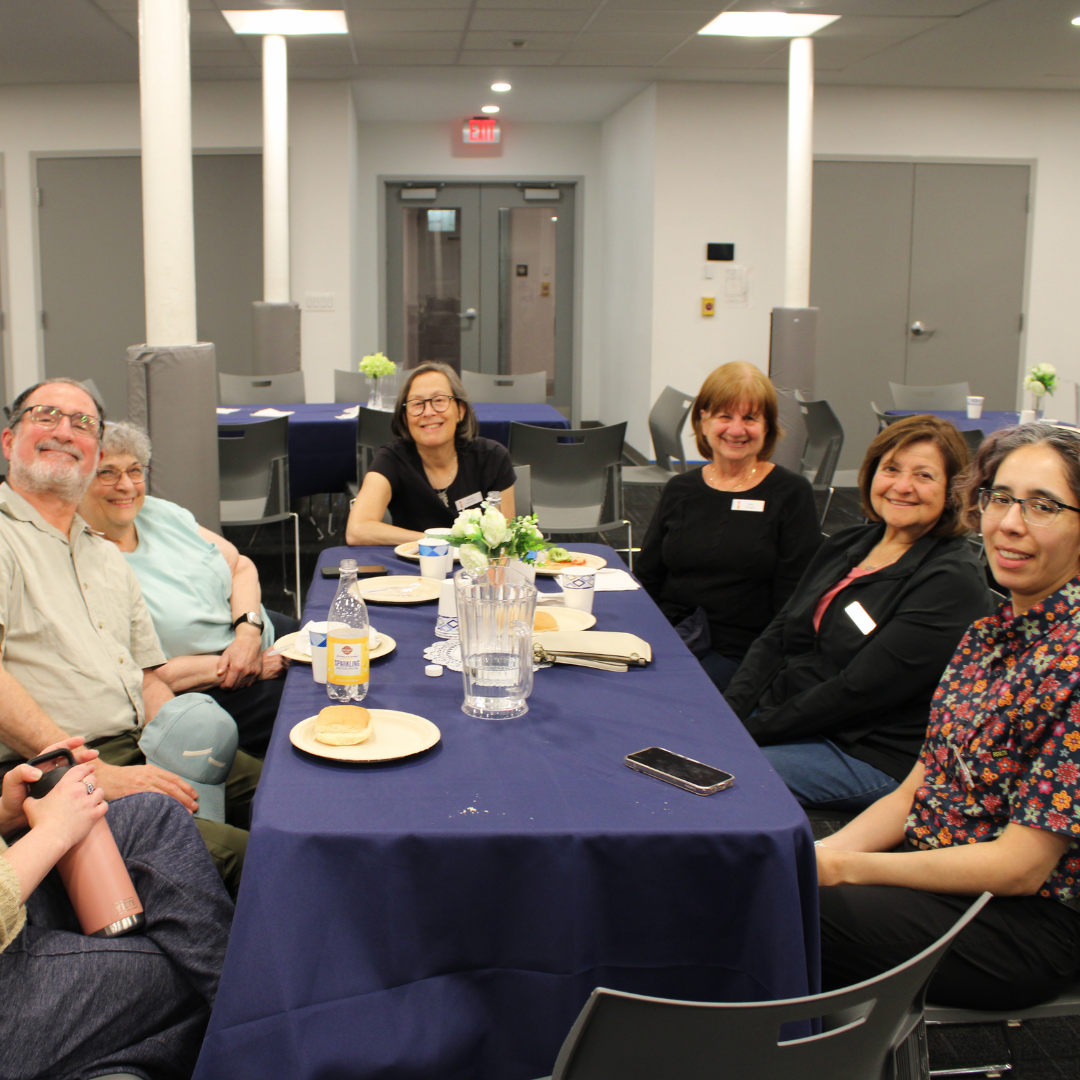
It’s what I witness next that gives me some of the most pride in my work. In an age where it is increasingly hard to find community, where people wring their hands about the decline of Jewish life, and folks are increasingly glued to their phones and personal bubbles, on Shabbat mornings here, we have a Social Hall with people of all ages — toddlers up to nonagenarians — breaking bread together, experiencing Shabbat in the warmth of community.
Our standard food order for Saturday lunches is for 140 people — that’s without a B’nei Mitzvah or special event — and there are never leftovers. We don’t put pressure on people to attend services, though we certainly welcome it. We believe the wisdom of our ancestors in holding space for prayer and the study of ancient texts is something that injects a sense of the sacred into our lives. We also believe it is foundational to nourish community in whatever ways people find accessible.
But these thrilling moments are not without their challenges. The Social Hall is getting more and more crowded, as our congregation has grown from 270 households just before the pandemic to 420 today, and from a low of 65 Hebrew School students during the early stages of the pandemic to 115 today.
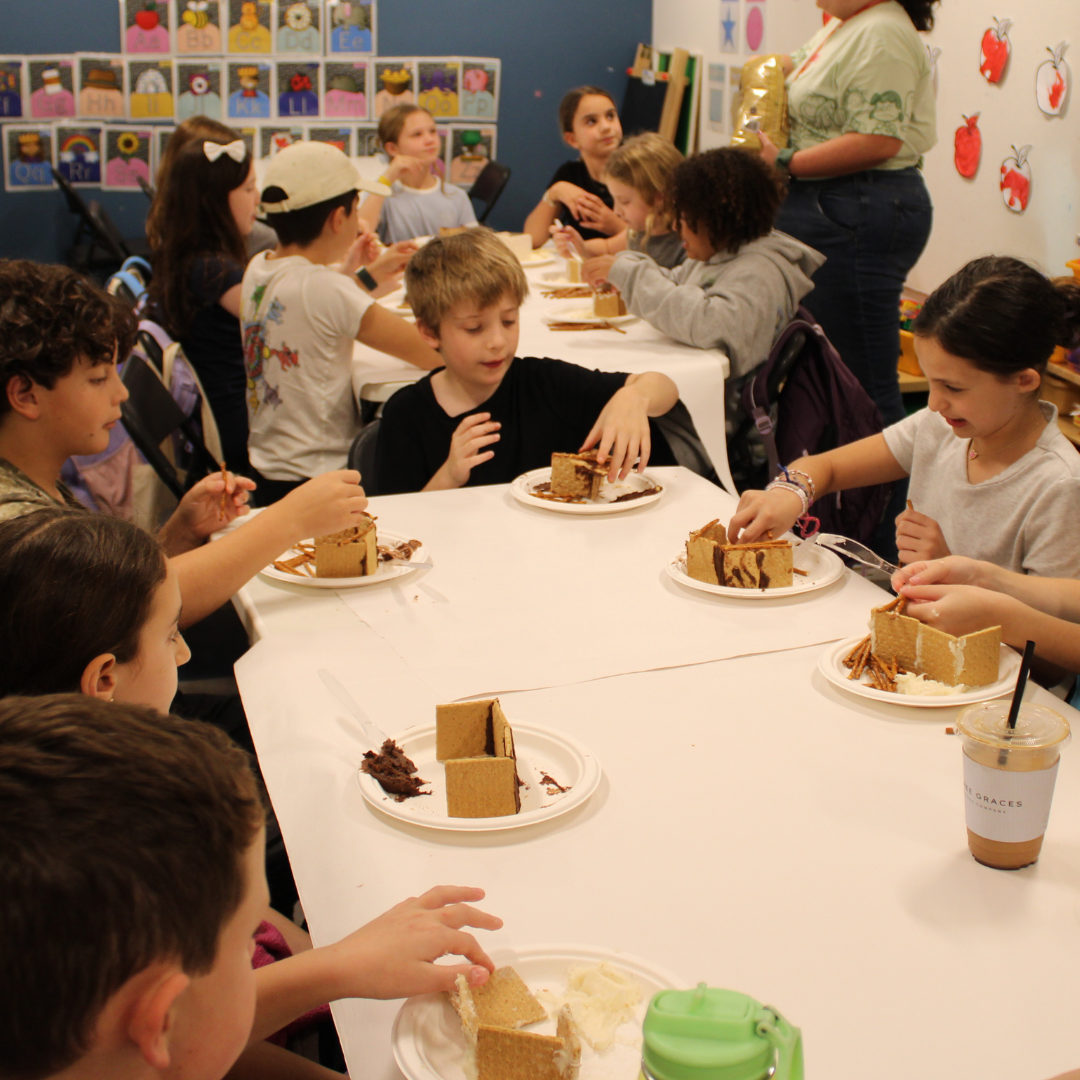
More than that, part of the reason that our students get to the Social Hall so quickly for lunch is because they’ve been filling every nook and cranny of this building for their learning. Despite the challenges of having multiple classes in the same space, several classes meet concurrently in the Social Hall. Another class meets in a hallway on the first floor. And students cram into our well-designed but admittedly snug classrooms of the Paula Kline Learning Center. Put plainly, we have more students than we have room for in our traditional classrooms right now. And our incoming classes are getting larger and larger.
Fortunately, we are exploring a pathway forward to relieving some of these space constraints and opening up new opportunities for learning and connecting.
Our Strategic Planning Committee has been pursuing a Feasibility Study to imagine how we can better use our existing footprint, including possible renovations to our synagogue annex, the southern wing of our building that currently houses our administrative suite, clergy offices, and Beit Midrash. The Feasibility Study is also exploring how the Sanctuary could become more accessible and hospitable.
We are witnessing people be drawn to Society Hill Synagogue for an experience of Jewish connection and foundation. We think we are providing a real service to the community at a trying moment, serving as something of a refuge and a source of nourishment and strength. And we want to be able to continue offering this to people who need it, without having space as a limiting factor.
We’re excited at the possibilities that such explorations hold for us, and we hope you’ll join us in thinking creatively about how to continue building Jewish community for all who seek it.


 It’s what I witness next that gives me some of the most pride in my work. In an age where it is increasingly hard to find community, where people wring their hands about the decline of Jewish life, and folks are increasingly glued to their phones and personal bubbles, on Shabbat mornings here, we have a Social Hall with people of all ages — toddlers up to nonagenarians — breaking bread together, experiencing Shabbat in the warmth of community.